How to Become a Locksmith in Massachusetts
No standalone locksmith license in Massachusetts, but electronic security-system work needs the S-license route.
Bill’s step-by-step locksmith business startup system.
One-time purchase via Gumroad. Study and planning aid only; official agencies set the requirements.
Massachusetts quick facts
Summarized from the official sources cited in this guide. Confirm with the agency before you pay or accept work.
- State license
- None listed. The state professional-license page shows no standalone mechanical-locksmith license. MA licenses
- Security systems
- Electronic security-system work requires the S-license route and employee clearances. S-license guidance
- Electrical
- Electricians and security-system FAQs. Electrician FAQ
- Business setup
- Local business certificates and permits also apply. Starting a business
Requirements change. This is not legal advice. Full details and every source are below.
 LOCKSMITH BLUEPRINT
MA / VERIFIED 2026
How to Become a Locksmith in Massachusetts
A state-specific route from current licensing verification to practical training and a properly structured locksmith business.

Start with the rule that controls your exact work
Massachusetts does not present a standalone mechanical-locksmith license on its current professional-license page, but electronic security-system work requires the S-license/electrician route and employee clearances. Local business certificates and permits also matter.
Rules, fees, forms, and local interpretations can change. Re-open the official source immediately before applying, advertising, or taking a job. This guide is educational, not legal advice.
Seven lanes to separate in Massachusetts
Build it in the right order
Define the service boundary
List the exact Massachusetts services you will advertise: mechanical locks, automotive keys, safes, door hardware, access control, alarms, and electrical work are not automatically the same regulatory lane.
Verify the current state route
Open the official sources below, confirm the credential or absence of a standalone category, and save the date, page, contact, and answer in the compliance file.
Build the legal business
Choose the entity, name, tax accounts, insurance, records, and local permissions that apply where the Massachusetts business is based and where it accepts jobs.
Train before selling the job
Practice identification, authorization, non-destructive entry, rekeying, hardware diagnosis, quoting, documentation, and a safe stop-work decision.
Recheck before launch
Verify credentials, local permits, restricted scope, renewal dates, vehicle documents, website claims, and the handoff process before the first paid call.
Ready to actually start your locksmith business in Massachusetts?
The $197 Locksmith Blueprint Operator Version walks you through the setup process step by step for Massachusetts — where to go, what to click, what to register, what to verify, and what to do next.
No guesswork. No bouncing between random websites. Follow the process in order and use the state-specific guidance to get your business set up correctly.
Get the $197 Operator Version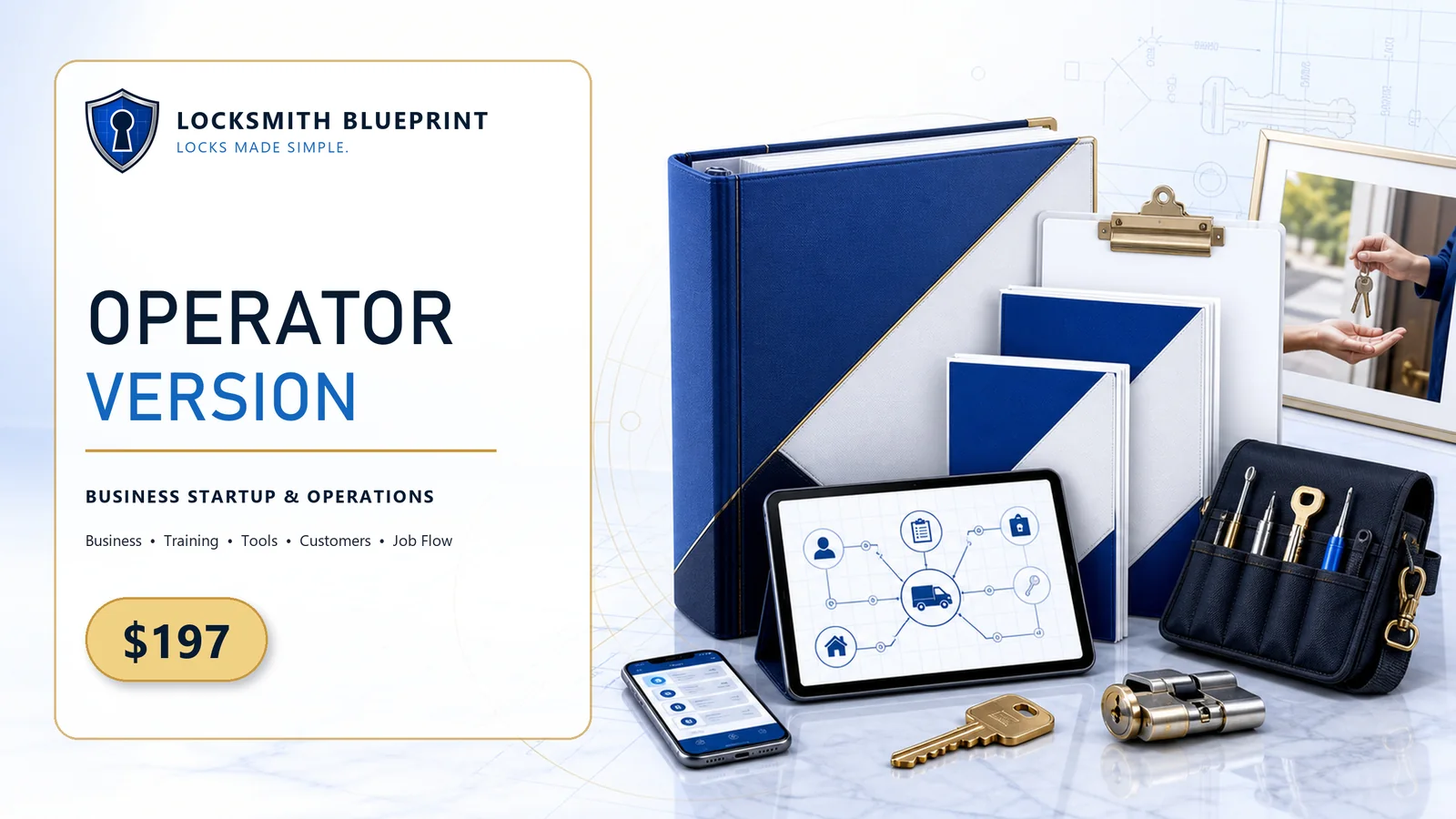 CLICK-BY-CLICK • STEP-BY-STEP • MASSACHUSETTS
We already did the legwork for Massachusetts
The paid Massachusetts State Roadmap turns scattered government information into an ordered verification plan. It explains the requirements that matter, the agencies to check, the checkpoints that can change your route, what to verify before taking paid work, and what to do next.
Choose the paid State Expansion option for current, state-specific guidance. Confirm the exact option and delivery details on the current offer page before checkout.
See the Paid Massachusetts State RoadmapWatch It / Read It / Do It
See the workflow, tools, and field decisions in context.
Use the written system as the repeatable reference beside the job.
Practice safely, document the result, and repeat the process in order.
One system from first skill to a working Massachusetts business
Locksmith Blueprint connects learning, field reference, and state-specific business execution. Start at the level that matches your intent, then move to the next logical product when you are ready.
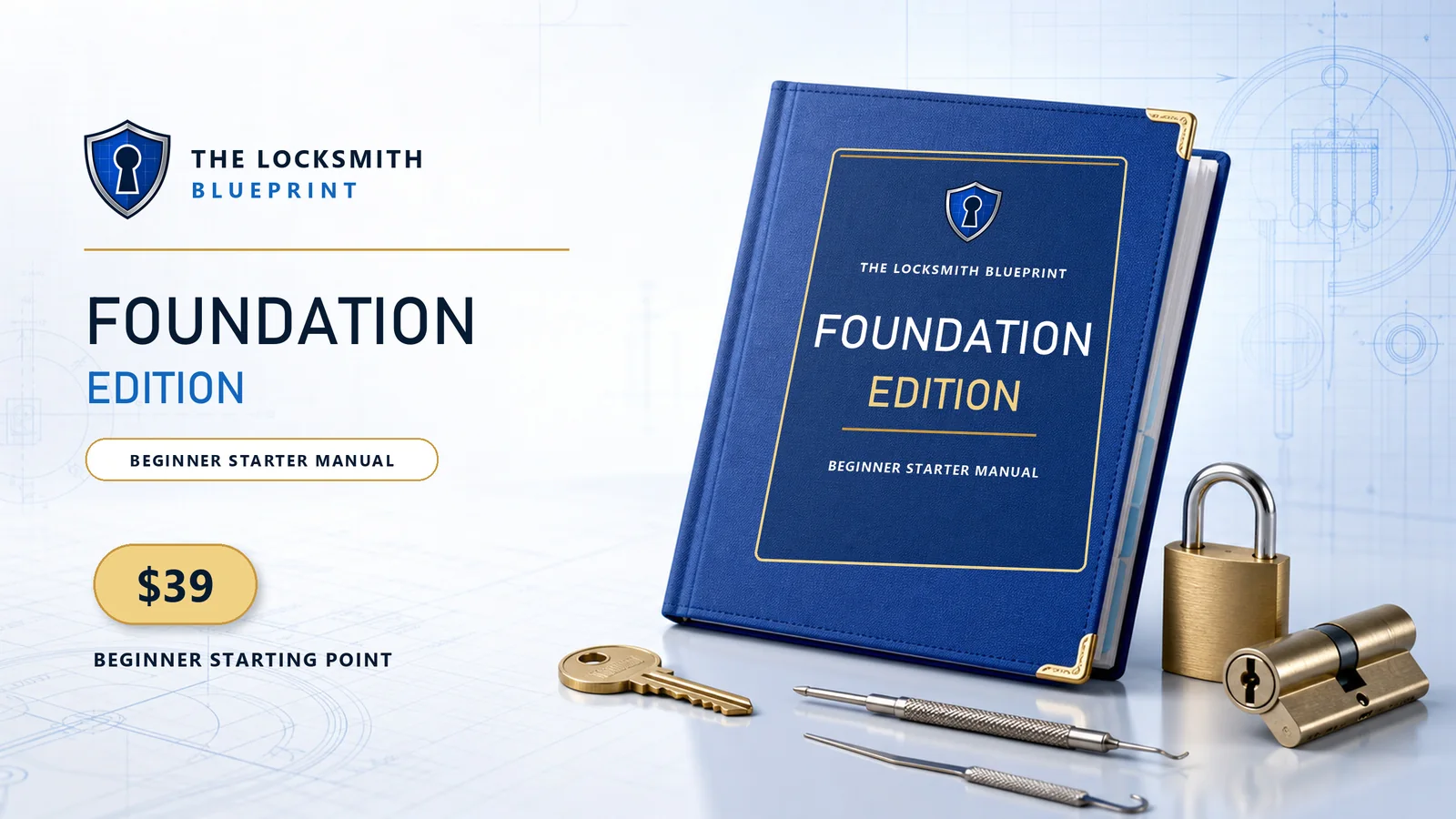
Foundation Edition
What it is: the entry-level orientation to the locksmith trade and business model.
Who it’s for: a beginner deciding whether this work is the right fit.
Problem it solves: replaces random browsing with a clear starting framework.
What you get: the core path, vocabulary, service categories, and setup priorities.
Next logical product: the Master Training Manual for deeper technical study.
Get the Foundation Edition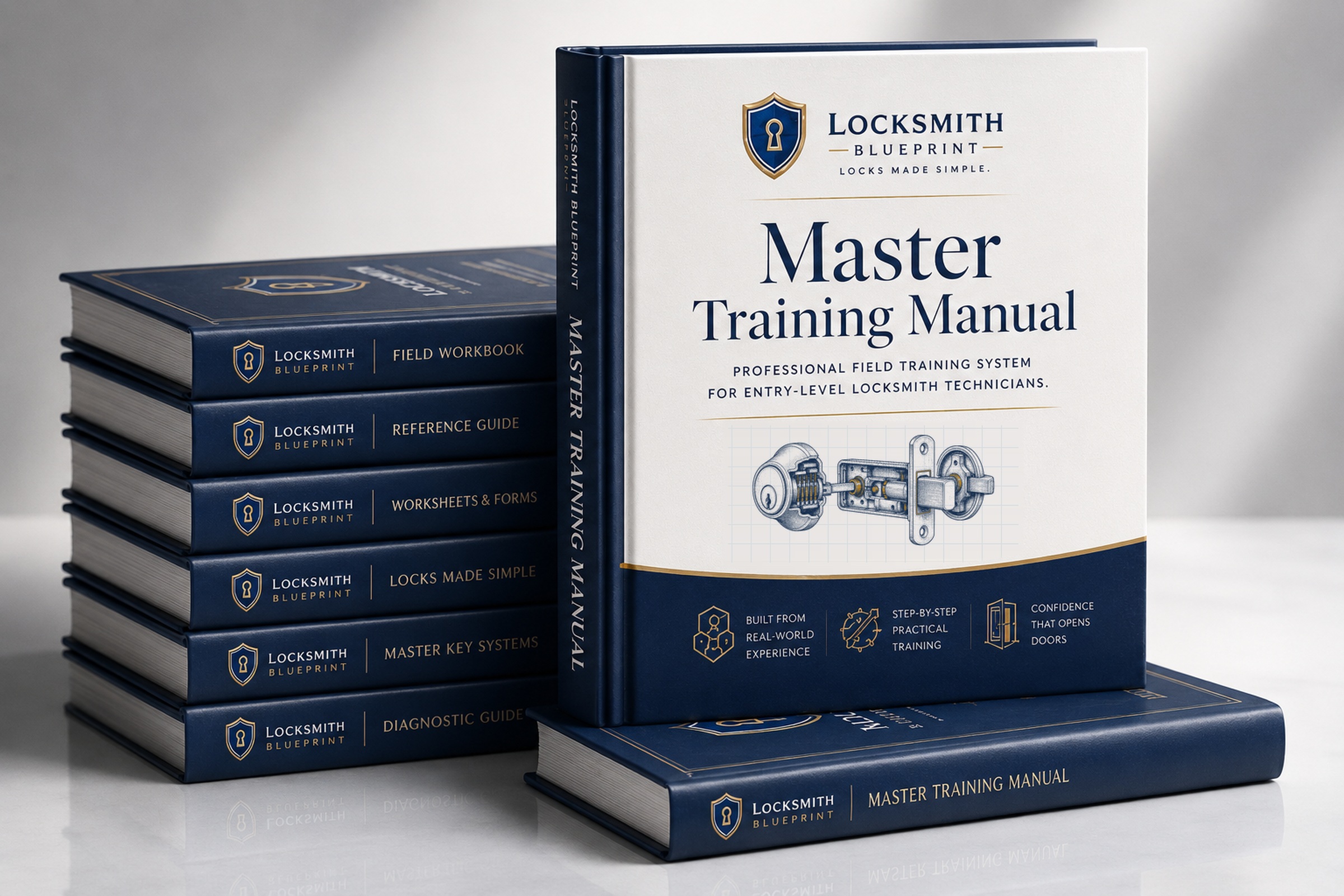
Master Training Manual
What it is: the primary technical training and field-reference system.
Who it’s for: readers whose immediate intent is to learn and perform locksmith work.
Problem it solves: organizes practical knowledge into a usable sequence instead of scattered tips.
What you get: deeper procedures, field logic, job preparation, and a reference you can return to.
Next logical product: the Operator Version when you are ready to start the business.
Get the Master Training Manual$197 Operator Version
What it is: the state-specific, click-by-click business startup system.
Who it’s for: a trained reader ready to actually launch in Massachusetts.
Problem it solves: eliminates guesswork and bouncing between disconnected websites.
What you get: where to go, what to click, what to register, what to verify, and what to do next.
Next logical product: add the paid Massachusetts State Roadmap/State Expansion for a focused verification layer.
Get the $197 Operator VersionWhat responsible Massachusetts work looks like
Before entry
Confirm identity, authority, address, scope, price, and any property-manager or vehicle documentation.
During work
Use the least destructive safe method, control keys and codes, photograph agreed conditions, and stop when authority or scope is uncertain.
At handoff
Test operation, explain changes, inventory keys, document parts and approvals, collect payment, and retain the record securely.
What do locksmiths earn in Massachusetts?
Locksmiths and safe repairers (SOC 49-9094), wage-and-salary employees. Source: U.S. Bureau of Labor Statistics, OEWS, May 2025. Medians exclude self-employed business owners.
In Bill’s 10+ years in the trade, he personally knows locksmiths earning around $150,000 a year—typically established business owners with years of experience.
That is Bill’s firsthand observation, not a typical or promised result. What you earn depends on your market, skills, licensing, hours, pricing and business costs. Results vary. Watch Bill explain the numbers.
Official Massachusetts sources to reopen before action
- Massachusetts professional licensesOfficial source reviewed August 8, 2026
- Massachusetts S-license FAQOfficial source reviewed August 8, 2026
- Starting a Massachusetts businessOfficial source reviewed August 8, 2026
Questions to settle before launch
Does business registration replace a locksmith credential?
No. Entity, tax, professional, contractor, alarm/electrical, employee, and local permissions are separate checks.
Can I rely on this page forever?
No. Use the official links and recheck immediately before acting because requirements can change.
What should I document on every job?
Identity, authority, address, scope, estimate, approval, methods, parts, keys, codes, payment, and final handoff.
Additional official sources
- Massachusetts DOL license directory
- S-License and Certificate of Clearance guidance
- S-license application guidance
- Current electrician and security-system FAQ
Links checked October 8, 2026. Requirements change, so confirm with the agency before you apply. This is not legal advice.
Operator Version$197 · digital download via Gumroad

Locksmith BlueprintLocks Made Simple
Real locksmith know-how from Bill, a working locksmith in Arizona: short videos, plain-English guides and printable checklists.