How to Become a Locksmith in Maine
No statewide locksmith license identified in Maine. Security-guard, contract-security, electrical, alarm, construction, and local scopes require separate verification.
Bill’s step-by-step locksmith business startup system.
One-time purchase via Gumroad. Study and planning aid only; official agencies set the requirements.
Maine quick facts
Summarized from the official sources cited in this guide. Confirm with the agency before you pay or accept work.
- State license
- None identified. Maine law expressly excludes locksmiths from the private-security chapter unless the locksmith also performs covered security-company work. Title 32, section 9417
- Exam & background
- No confirmed locksmith exam; background check and fingerprinting not identified for ordinary mechanical locksmith work.
- Business
- General business and municipal licensing requirements remain separate. license-scope statute
- Specialty work
- Security-guard, contract-security, electrical, alarm, construction, and local scopes require separate verification. private-security-guard chapter
Requirements change. This is not legal advice. Full details and every source are below.

How to Become a Locksmith in Maine
Maine is unusually useful because state law expressly excludes locksmiths from the private-security chapter unless the business also performs covered security-company work. That narrow answer does not replace business, municipal, electrical, alarm, construction, insurance, or customer-authorization checks.
What the current Maine sources do—and do not—require
This is a scoped research result, not a universal permission slip. It addresses ordinary mechanical locksmith work first and separates specialty work that can trigger a different rule.
Statewide locksmith license
No statewide locksmith-specific license identified
Locksmith exam
No confirmed locksmith exam
Age
No statewide locksmith-specific age requirement was identified in the official sources reviewed. Employers, contracts, and specialty credentials may set separate minimums.
Background check
Not identified for ordinary mechanical locksmith work. Recheck any employer, local, alarm, security, or specialty-credential rule.
Fingerprinting
Not identified for ordinary mechanical locksmith work. Do not apply that answer to a separately regulated security or alarm role.
Training or apprenticeship
No statewide locksmith-specific training or apprenticeship mandate was identified. Structured instruction, hands-on practice, and supervised field exposure remain the safest professional path.
Business or agency license
General business and municipal licensing requirements remain separate.
Insurance or bond
Insurance: Confirm with the state, locality, insurer, and contracting authority.; Bond: Not identified in current sources reviewed
Evidence status: VERIFIED – CURRENT. Official-source review: 2026-09-03. Recheck before paid work because laws, rules, agency guidance, forms, and local requirements can change.
The Maine decision that prevents expensive mistakes
A customer asks for a mechanical rekey, camera placement, and alarm monitoring. Maine's locksmith exclusion may address the mechanical portion, but it should not be stretched to cover a separate security-company service. Divide the work and verify the covered security activity independently.
Work-scope boundary
Security-guard, contract-security, electrical, alarm, construction, and local scopes require separate verification.
Local layer
City, county, and scope-specific rules may apply even when no statewide locksmith credential is identified.
Safe rule
Describe the complete job to the responsible agency. Never assume a business name, training certificate, or mechanical-lock task also covers wiring, alarms, construction, or life-safety work.
A Maine path you can follow in order
Read the Maine exception accurately
Use Title 32 section 9417 for the locksmith/private-security distinction and do not describe the exception more broadly than the text supports.
Choose a limited starter service menu
List mechanical key, cylinder, lock, and door-hardware services that match your training, tools, insurance, and verified local rules.
Complete business and municipal checks
Confirm entity, tax, assumed-name, zoning, local license, vehicle, signage, and other requirements for the operating location.
Separate security-company work
Stop and recheck before promising guarding, investigations, monitoring, alarm, surveillance, electrical, or other separately regulated services.
Build a winter-ready quality process
Protect parts and lubricants, manage travel promises, photograph existing conditions, test the opening, and record the final key handoff.
Watch it, read it, then do it in Maine
The video explains income context; it does not replace Maine licensing, local, business, or work-scope verification.
Use the field video to connect training, service mix, and realistic earning expectations.
Use this written Maine guide for the current state decision, boundaries, links, and reference details.
Write your starter service list, verify every category, and practice the mechanical workflow on owned hardware.
Start with work you can explain, practice, and verify
A first job should match your mechanical skill, customer-verification process, tools, insurance, and confirmed legal scope. Employment with an experienced locksmith can add supervision, hardware variety, estimating practice, and feedback that a video cannot provide.
Build the starter kit around the work: common hand tools, plug followers, pinning tools, tweezers, key gauge, practice cylinders, measurement tools, door and strike inspection tools, documentation forms, eye protection, and secure key control. Do not buy advanced bypass, automotive, safe, or electronic equipment before you understand its lawful use and limitations.
Maine job-scope examples
- ✓Mechanical rekeying that remains inside the verified locksmith service and customer authorization.
- ✓A corroded coastal lock diagnosed for alignment, wear, and environment before replacement.
- ✓An alarm or surveillance request separated from the locksmith exception and sent through a new licensing check.
- ✓Structural door or frame alteration reviewed for construction, electrical, fire, and local requirements.
Before dispatch: confirm identity, authority over the property or vehicle, exact opening, hardware, requested result, exclusions, estimate approval, and the responsible person for final handoff.
How to become a locksmith in Maine step by step
Maine gives a beginner a useful statutory starting point, but not a blanket permission slip. State law defines a locksmith for the private-security chapter as a person engaged in the sale and service of locks and excludes that work from the chapter unless the person also works as a security guard or contract security company. Build the career path around that exact language, then verify every additional service separately.
Define the work
List the mechanical lock, key, cylinder, door, powered hardware, alarm, camera, or access-control task actually promised.
Read the Maine exception
Use the current text of Title 32, section 9417; do not enlarge the exception beyond sale and service of locks.
Choose a training route
Seek supervised field experience, structured mechanical practice, manufacturer education, or a suitable registered-apprenticeship opportunity.
Clear the business layer
Confirm the entity, municipal operating rules, tax registrations, insurance, vehicle, records, and customer-authorization process.
Understand what Maine’s locksmith exception does—and does not do
The exact rule matters. Maine’s private-security-guard chapter regulates contract security companies and security guards. Section 9417 excludes a person employed or doing business as a locksmith, but says the chapter applies when that locksmith is employed as a security guard or does business as a contract security company. The same section supplies the chapter’s limited definition of locksmith: a person engaged in the sale and service of locks.
This supports a careful conclusion: the cited private-security chapter does not create a stand-alone statewide locksmith license for ordinary sale and service of locks. It does not prove that every service a locksmith might advertise is unregulated. Electrical wiring, low-energy electronics, fire alarms, construction, security services, sales tax, employment, zoning, and permits have their own questions. Classify the whole job rather than relying on the business name.
Use conservative customer language. Say that the official source reviewed provides a locksmith exception inside the private-security chapter. Do not say Maine has “no rules” or that a locksmith may perform any security or electrical task without another credential. Before expanding services, read the responsible agency’s current material or obtain a written classification.
Separate mechanical locksmith work from nearby regulated work
Keys, cylinders, and locks
Rekeying, key origination, lock servicing, and replacement of like-for-like mechanical hardware fit the ordinary locksmith path most directly. Verify customer authority and any door, lease, warranty, or local requirement.
Powered locking and wiring
Maine separately licenses electrical installations. The current license-scope statute includes a limited-electrician category for low-energy electronics and fire-alarm systems. Do not treat low voltage as automatically unlicensed.
Guard or contract-security services
The locksmith exception changes when the business also performs covered security-guard or contract-security-company work. Use the Maine State Police licensing material to verify that separate lane.
The electrical rules also contain specific exceptions, but a beginner should never assume an exception applies. Read Title 32, section 1201-A and confirm the exact installation with Maine’s Electricians’ Examining Board. A mechanical cylinder change and the wiring of an electric strike are not the same scope simply because both occur at one door.
Choose a Maine training and employment path
A beginner needs repeatable skill before taking solo calls. Start with key identification, pin-tumbler anatomy, safe disassembly, rekeying, impression control, hardware identification, door and frame terminology, customer authorization, documentation, and non-destructive diagnostic habits. Practice on owned training hardware, not on customer property. Record each successful reassembly and verify that the lock works from both sides before increasing difficulty.
Employment with an established locksmith or door-hardware company can provide supervised exposure to real doors, scheduling, estimates, inventory, customer communication, and job documentation. Ask prospective employers which services they perform, what supervision a new technician receives, whether driving or background standards apply, and how electrical or access-control work is separated from mechanical locksmithing.
Maine also operates a registered-apprenticeship system. The Maine Apprenticeship Program and its search tool can help a learner look for current opportunities. Do not promise that a locksmith occupation or sponsor is available in a particular town. Search the current listings, ask an employer about structured on-the-job learning, and compare the program’s actual occupation and curriculum with the locksmith skills you need.
Build the Maine business layer in the correct order
Maine’s official business portal says general licenses to operate a business are managed at the town or city level. Begin with the Maine business-licensing page, then use the local-government directory to reach each municipality in the planned service area. Ask about local business licensing, home occupation, zoning, signs, parking, mobile operations, building access, and any permit tied to the exact work.
If forming a corporation or limited-liability company, use the Maine Bureau of Corporations. Entity registration does not decide whether a particular trade task is permitted. It creates the legal business record; trade scope, local authorization, taxes, and insurance remain separate.
A locksmith may sell keys, cylinders, hardware, or other tangible items as part of the service. Review the current Maine Revenue Services sales-and-use-tax guidance and describe the planned mix of goods and labor accurately. Keep invoices detailed enough to identify parts, labor, trip charges, and other amounts rather than using one vague total.
Before the first paid job, arrange appropriate insurance with an agent who understands mobile locksmith work. Explain every intended service, including vehicle entry, key work, residential rekeying, commercial hardware, safe work, and powered openings. A policy label is not enough; confirm exclusions and limits in writing. Build a secure process for customer identity, authorization, keys, key codes, photographs, access credentials, and disposal of sensitive records.
Use Maine-specific job-scope decisions in the field
Residential rekey after a move
Confirm who owns or controls the property, which doors are included, how many keys are authorized, and whether any electronic component is present. Photograph the existing hardware with permission, record the keying change, test every operated door, and give the customer a clear handoff. If a damaged door or frame needs construction beyond the agreed mechanical work, pause and classify that repair separately.
Commercial electric strike that will not release
Do not begin by replacing the strike. Identify the power supply, controller, reader, request-to-exit device, door-position device, fire-alarm interface, and mechanical alignment. Determine who is qualified to test or alter each portion. The symptom may be mechanical, electrical, programming-related, or part of an egress sequence. Stay within the authorized credential and bring in the appropriate licensed trade when the test crosses that boundary.
Customer requests locks, cameras, and monitoring
Divide the proposal into separate work categories. The section 9417 locksmith exception should not be stretched to cover contract-security services. Verify the camera, alarm, monitoring, wiring, and security-company questions independently before advertising a bundled package. If the business cannot lawfully deliver one portion, refer or subcontract through a properly qualified provider rather than hiding it inside “locksmith service.”
Automotive lockout near a state border
Verify vehicle ownership or lawful control, obtain clear authorization, document existing damage, and use a method appropriate to the vehicle. If the call crosses into another state, do not assume Maine’s rules travel with the technician. Confirm the destination jurisdiction, business authority, insurance territory, and any local or state credential before accepting the trip.
Follow a practical 30-60-90 day Maine beginner plan
Days 1–30: learn and verify
Read the cited Maine sources. Define the intended service menu. Build a practice board with common mechanical locks. Learn authorization, key control, hardware identification, safe disassembly, rekeying, and final testing. Contact the municipality and record the name, date, question, and answer for each business requirement.
Days 31–60: supervised repetition
Repeat core procedures until pinning, assembly, key checks, and documentation are consistent. Shadow qualified work where available. Build estimates and invoices that describe the actual scope. Draft a stop-work rule for uncertain authority, unsafe doors, electrical work, life-safety conditions, and requests outside training.
Days 61–90: controlled paid work
Accept only services that match verified authority, training, tools, insurance, and documentation. Keep the starting service area small. Review callbacks and mistakes. Add a new service only after its equipment, procedure, legal category, risk, and quality check are understood.
Keep a Maine verification file
Create one dated folder for the statutory locksmith exception, municipal answers, entity documents, tax registrations, insurance, apprenticeship or training records, electrical-scope questions, customer forms, and service-area notes. Keep regulatory research separate from customer records. Revisit the file before adding powered locks, access control, alarms, cameras, security personnel, construction, or another state.
Add a service-boundary sheet that every employee can understand. For each advertised service, name the physical task, the equipment involved, the training required, the person allowed to perform it, the government source checked, and the condition that triggers a stop. Review that sheet during onboarding and after any callback or unusual request. If an agency answer is verbal, record the date, office, contact method, question asked, and the answer received; then seek written confirmation when the scope carries meaningful safety or licensing risk.
Use the same file to control changes. A new tool, supplier, customer type, or marketing phrase can widen the implied service even if the company never intended to do so. Compare new advertising with the verified service list before it goes live. This keeps sales language, technician training, insurance, and lawful scope aligned.
This process creates a defensible benefit: the learner can answer the exact career question, identify the mechanical starting lane, distinguish adjacent regulated work, and take concrete next steps without relying on an unsupported “no license required” shortcut. It also gives Google and readers substantial Maine-specific information that the prior page lacked while preserving the established URL, title, H1, canonical, products, video, and analytics.
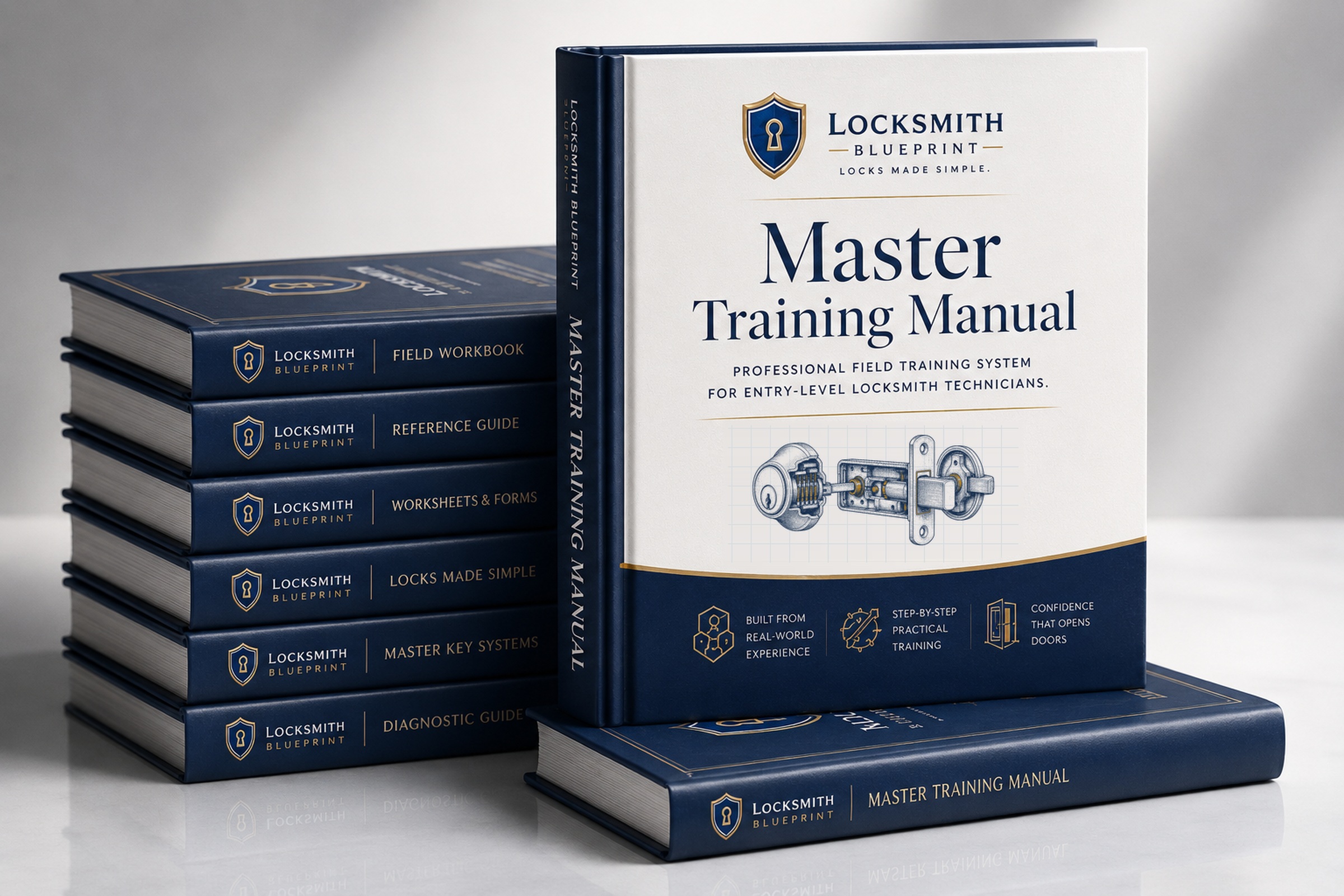
Turn the Maine checklist into real mechanical skill
The Master Training Manual provides the connected written instruction, diagrams, checklists, and field reference that a short state guide cannot contain. It is training—not a government credential—and it should be paired with deliberate hands-on practice.
Verify Maine at the source
These government sources support the statewide and specialty-scope statements used in this guide. They are starting points, not a substitute for a written agency answer about a specific job.
Save an evidence record
- Record the service names you searched.
- Save the agency URL and access date.
- Write down the agency or local contact.
- Keep any written classification with the estimate.
- Schedule a recheck before adding services.
What do locksmiths earn in Maine?
Locksmiths and safe repairers (SOC 49-9094), wage-and-salary employees. Source: U.S. Bureau of Labor Statistics, OEWS, May 2025. Medians exclude self-employed business owners.
In Bill’s 10+ years in the trade, he personally knows locksmiths earning around $150,000 a year—typically established business owners with years of experience.
That is Bill’s firsthand observation, not a typical or promised result. What you earn depends on your market, skills, licensing, hours, pricing and business costs. Results vary. Watch Bill explain the numbers.
Choose the resource that matches your next step
These products support training and business planning. They do not replace Maine licensing, permits, supervision, insurance, or official approval.
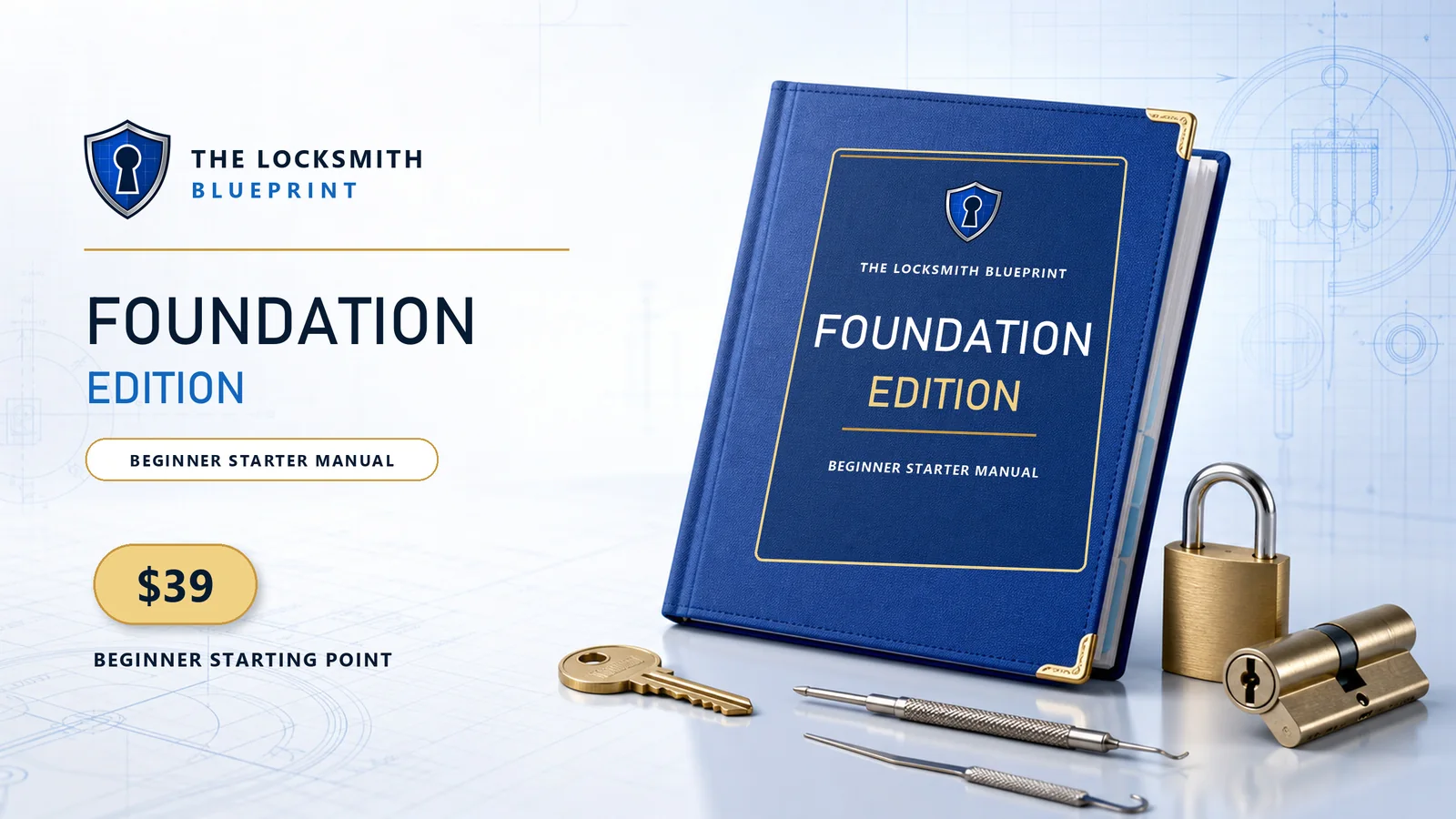
Foundation Edition
A guided starting point for beginners who want the trade, service categories, and learning sequence explained clearly.
Master Training Manual
The complete beginner-first technical training and field-reference system for structured locksmith study.
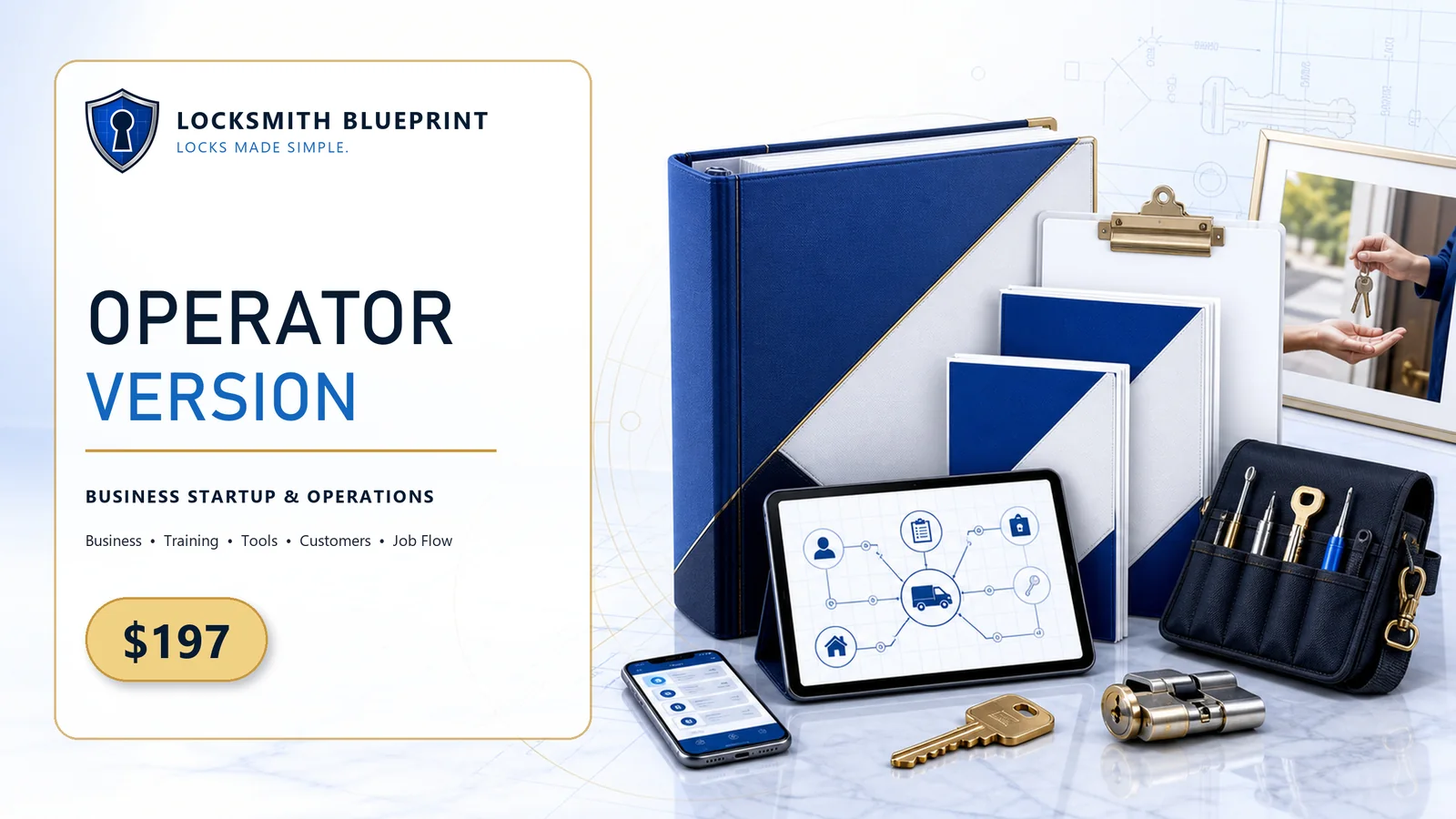
Operator Version
The business operating system for a trained reader preparing to organize real locksmith-company workflows.
Maine locksmith requirements FAQ
Does Maine require a statewide locksmith license?
No statewide locksmith-specific license identified. Verify the exact service and current official guidance before paid work.
Is a locksmith exam required in Maine?
No confirmed locksmith exam. A separately regulated contractor, electrical, alarm, or security role can have its own qualification rules.
Do Maine locksmiths need a background check or fingerprints?
Not identified for ordinary mechanical locksmith work; fingerprinting was also not identified for ordinary mechanical locksmith work. Employer, local, alarm, security, or specialty rules can differ.
Should a beginner get training before working in Maine?
Yes. Even when no statewide locksmith-school mandate is identified, a beginner should learn mechanical fundamentals, practice on owned hardware, use customer-verification procedures, and seek supervised field feedback before solo paid work.
What should be verified locally in Maine?
City, county, and scope-specific rules may apply even when no statewide locksmith credential is identified. Also verify zoning, home-business, permits, advertising, construction, fire, electrical, alarm, and access-control rules that match the location and complete job.
What is the safest first paid locksmith work in Maine?
Choose a narrow mechanical service you can perform and test reliably, confirm customer authority, document the approved scope, and stop when the job reaches an unverified specialty or exceeds your current competence.
Operator Version$197 · digital download via Gumroad