How to Become a Locksmith in Arizona
No statewide locksmith license for ordinary mechanical work in Arizona, but contractor, alarm and local rules can apply.
The beginner starting point this guide recommends.
One-time purchase via Gumroad. Study and planning aid only; official agencies set the requirements.
Arizona quick facts
Summarized from the official sources cited in this guide. Confirm with the agency before you pay or accept work.
- State license
- The Arizona sources reviewed do not identify a standalone statewide locksmith credential for ordinary mechanical work.
- Contractor work
- Construction-type work can need a Registrar of Contractors license. ROC classifications
- Alarm work
- Alarm businesses and agents are regulated separately. A.R.S. 32-101
- Local rules
- Check permits, larger projects and city requirements before paid work.
Requirements change. This is not legal advice. Full details and every source are below.

LOCKSMITH BLUEPRINTLOCKS MADE SIMPLE
HOW TO BECOME A LOCKSMITH IN ARIZONA
How to Become a Locksmith in Arizona
Learn how to become a locksmith in Arizona through a practical beginner path that explains state requirements, supervised training, safe job boundaries, and employment or business ownership.
- Beginner-first guidance
- Verified with local caveat
- Last reviewed August 7, 2026
PROTOTYPE
ARIZONA REQUIREMENTS AT A GLANCE
Arizona locksmith requirements at a glance
The Arizona sources reviewed do not identify a single statewide occupational credential titled a locksmith license for ordinary mechanical locksmith work. That does not mean every Arizona locksmith job is unregulated. The rule that matters is the scope of the work: rekeying or replacing mechanical door hardware is different from installing alarms, electronic access control, or work that may fall under contractor or permit rules.
Start by defining the service you plan to offer. Then verify the applicable Arizona contractor, alarm, and local requirements before quoting or accepting the job. Build mechanical skill on hardware you own or have permission to use, and stop or refer any work that exceeds your training, insurance, equipment, or legal scope.
- Statewide locksmith license: the Arizona sources reviewed do not identify a standalone statewide locksmith credential for ordinary mechanical locksmith work.
- Contractor and permit boundary: Arizona Revised Statutes section 32-1121 contains limited contractor-license exemptions with conditions. Project price is not the only test; permit-required work and larger project scope can change the answer.
- Alarm and electronic-security boundary: Arizona Revised Statutes sections 32-101 and 32-121 define alarm businesses and alarm agents and establish requirements for regulated alarm work. Mechanical locksmith experience does not automatically authorize alarm work.
- Local verification: confirm the city or county rules for the actual job location before advertising or accepting work.
Use this page as education, not legal advice. Requirements change. Verify the current answer with the responsible Arizona and local agencies before advertising or accepting paid work.
ARIZONA JOB-SCOPE EXAMPLES
Why the exact Arizona job scope matters
A residential rekey, a deadbolt replacement, a storefront access-control installation, and an alarm-connected lock are not one regulatory category. Define the job before deciding what rules apply. Ask whether the work requires a permit, is part of a larger construction project, includes monitored or alarm equipment, or falls outside your training. If the answer is yes or unclear, verify the requirement with the responsible Arizona or local authority before proceeding.
FIVE PRACTICAL BEGINNER STEPS
How to become a locksmith in Arizona: five first steps
Start with a defined mechanical scope, controlled bench practice, and clear verification boundaries. Build the skill first; then choose tools and supervised experience that match the work you intend to perform.
Define your mechanical starting scope
Define the mechanical services you intend to learn before buying specialty tools.
Separate regulated electronic work
Separate mechanical lock work from alarm, access-control, and other electronic-security work.
Check permits and contractor boundaries
Check contractor and permit implications before quoting installation work.
Practice on owned hardware
Practice identification, disassembly, reassembly, and testing on owned hardware before accepting paid work.
Verify every paid job
For every paid job, verify the customer and property relationship, document the scope, and confirm the work is inside your training and legal boundary.
THE LOCKSMITH BLUEPRINT LEARNING SYSTEM
Watch it. Read it. Do it.
Use three connected learning paths whenever a skill can be demonstrated. The video shows the procedure; the written lesson provides the complete explanation and reference detail; the exercise turns knowledge into controlled practice.
See the work performed
A concise Arizona pathway video is planned. It will demonstrate the beginner sequence and job-scope checks without replacing the written guide.
Video lesson in production
Use the complete reference
Read the legal distinction, learning sequence, tool guidance, training routes, warnings, and verified official sources on this page.
Complete a beginner exercise
- Identify five parts on an owned practice lock.
- Write the service scope in plain language.
- Check whether the scope is mechanical, contractor-related, or alarm-related.
- Choose the next supervised practice task.
TRAINING & FIELD EXPERIENCE
Choose a route that includes feedback.
No single route fits everyone. The useful question is whether the route teaches correct mechanical habits, gives you realistic practice, and helps you recognize jobs you are not ready or permitted to perform.
Structured self-study
Best for organizing terminology, systems, diagrams, procedures, and reference material in a repeatable sequence.
Apprenticeship or employer training
Best for seeing customer communication, job setup, diagnosis, documentation, and real hardware under supervision.
Hands-on classes
Useful when the program identifies actual hardware, provides practice time, and offers qualified feedback-not only a completion certificate.
Mentored bench practice
Useful for repetition: disassembly, inspection, reassembly, testing, and learning when to stop before damage occurs.
TOOLS & CONTROLLED PRACTICE
Buy tools for a defined practice task.
A beginner toolbox should support inspection, removal, reassembly, and testing. Avoid buying a specialty kit simply because it appears in a video.
Start with recognition
- Small screwdrivers and hand tools
- Follower and pinning tweezers for controlled bench work
- Owned practice cylinders and residential hardware
- Eye protection and an organized parts tray
Build a practice record
- Name the hardware before removing it
- Photograph the original assembly
- Record the fault or learning objective
- Reassemble and function-test before advancing
EMPLOYMENT OR BUSINESS OWNERSHIP
Decide which responsibility you want first.
Technical learning overlaps, but the operating responsibility is different. A business owner must add pricing, insurance, customer verification, documentation, taxes, local requirements, and a clear limit on regulated work.
Employment path
Look for a company that explains its service mix, training expectations, supervision, tools, driving requirements, scheduling, and pay structure.
- Build reliable mechanical fundamentals
- Ask how beginners are supervised
- Document jobs and feedback
- Learn when work is referred
ARIZONA OWNER PATH
Want to start a locksmith company in Arizona?
The Operator Version organizes business setup, pricing, job flow, customer handling, and practical operating systems. State and local requirements still require current official verification.
- Business setup sequence
- Pricing and job-flow guidance
- First-paying-customer plan
- Operational checklists
KEEP LEARNING
Follow the connected Arizona pathway.
Use the page that answers your next question instead of circling between two general guides.
What do locksmiths earn in Arizona?
Locksmiths and safe repairers (SOC 49-9094), wage-and-salary employees. Source: U.S. Bureau of Labor Statistics, OEWS, May 2025. Medians exclude self-employed business owners.
In Bill’s 10+ years in the trade, he personally knows locksmiths earning around $150,000 a year—typically established business owners with years of experience.
That is Bill’s firsthand observation, not a typical or promised result. What you earn depends on your market, skills, licensing, hours, pricing and business costs. Results vary. Watch Bill explain the numbers.
EXPLORE LOCKSMITH BLUEPRINT
Choose the training system that matches your next step.
Start with the entry-level foundation, move into the complete technical manual, or build the operating system for a locksmith company.
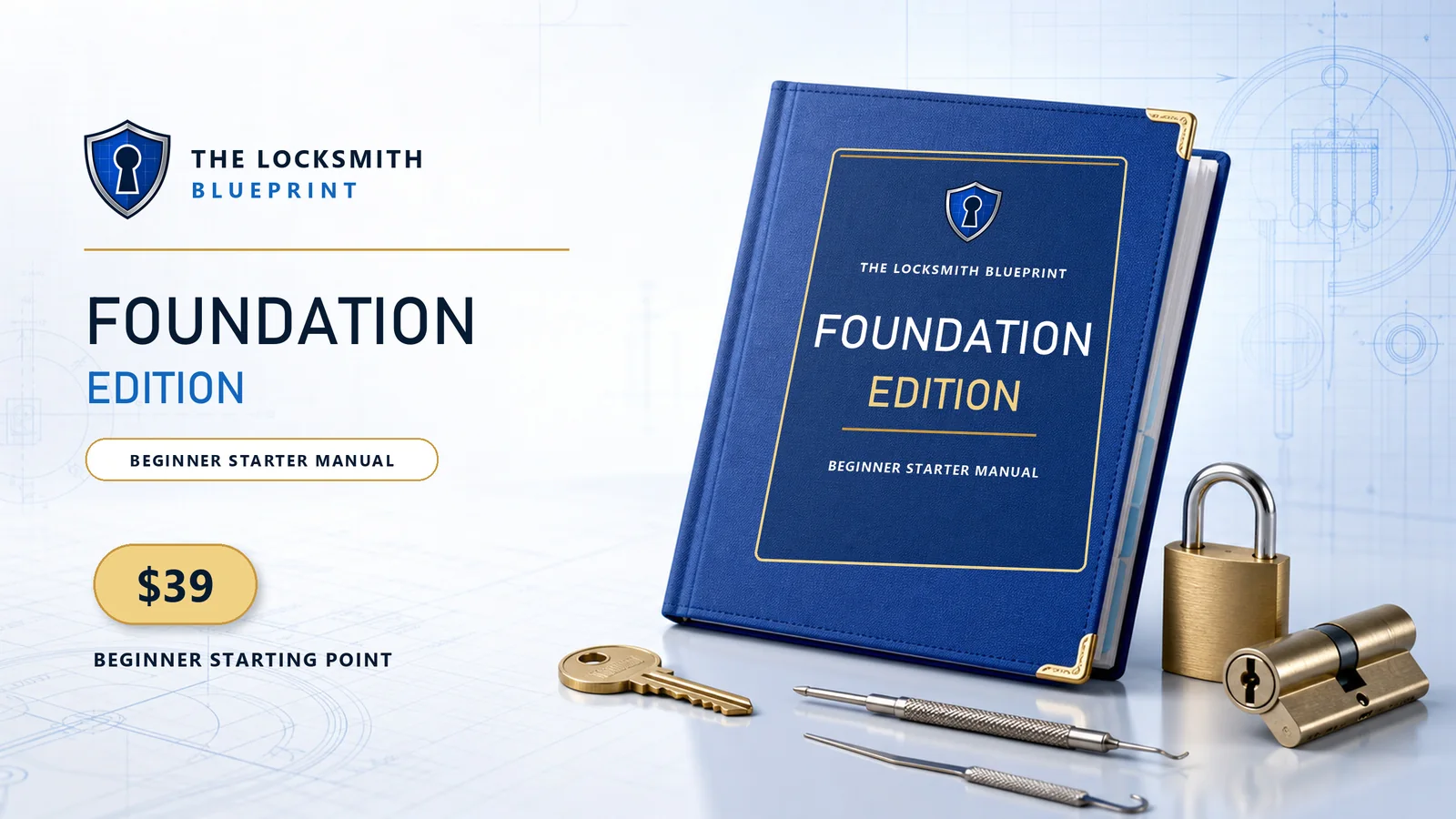
Foundation Edition
For a complete beginner who needs a clear starting structure before buying specialty tools or choosing advanced training.
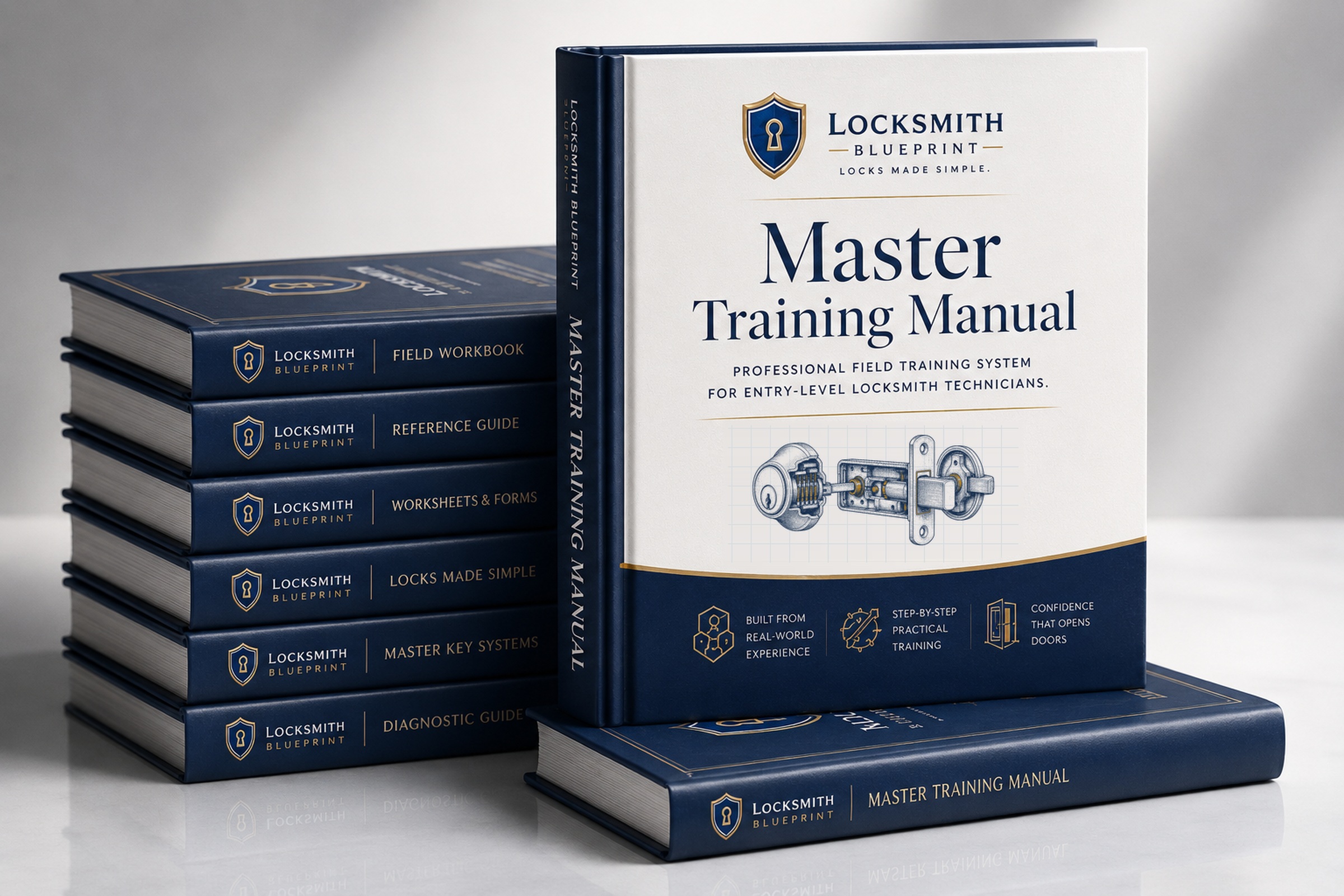
Master Training Manual
For structured mechanical locksmith education, diagrams, reference material, and a deeper professional training sequence.
$97 launch priceGet the Master Training Manual
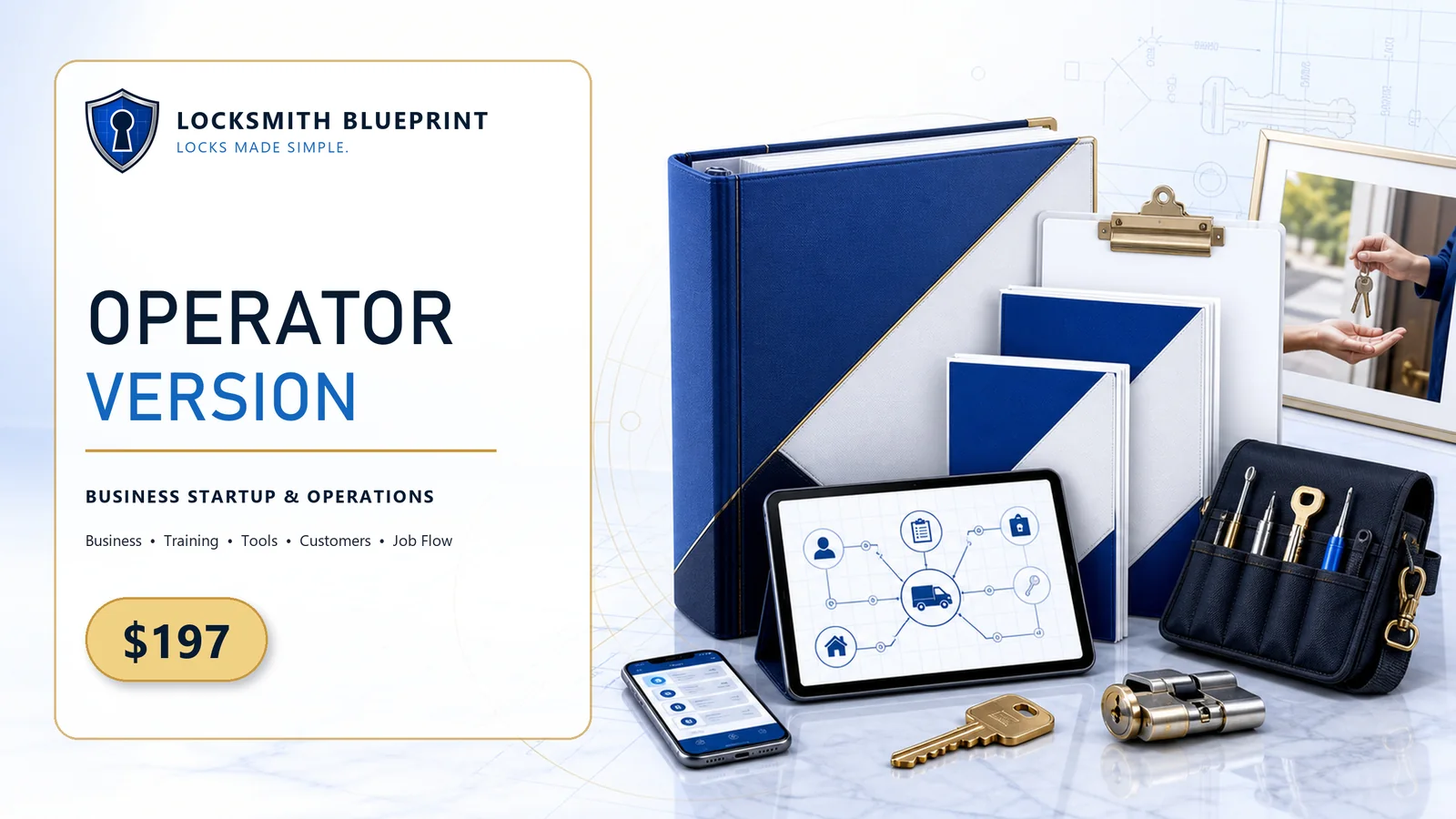
Operator Version
For the person building a real locksmith company with business setup, pricing, job flow, and operating systems.
ARIZONA BEGINNER FAQ
Questions people ask before they start.
Does Arizona require a statewide locksmith license?
The Arizona sources reviewed do not identify a standalone statewide locksmith occupational license for ordinary mechanical locksmith work. Contractor, permit, alarm, and local requirements may still apply to particular work.
Can I start taking paid locksmith jobs after watching online videos?
No training video by itself makes someone job-ready. Build controlled practice, seek qualified supervision, verify the customer and job scope, and confirm current legal requirements before accepting work.
Do I need locksmith school in Arizona?
Arizona does not impose one universal training route for ordinary mechanical locksmithing in the sources reviewed. Choose a route that teaches correct procedures, provides hands-on feedback, and fits employer and legal expectations.
What tools should an Arizona beginner buy first?
Begin with tools for a defined practice task: basic hand tools, owned practice hardware, an organized parts tray, and appropriate safety equipment. Learn what each tool supports before adding specialty equipment.
What changes if I start my own locksmith company?
Ownership adds business setup, taxes, insurance, customer verification, pricing, documentation, local compliance, and scope control. The technical skill is only one part of the operating system.
Your next step should be specific.
Use the Arizona scope checks before you choose tools, training, employment, or business ownership. If you need a different state, open the verified licensing hub.
Foundation Edition$39 · digital download via Gumroad

Locksmith BlueprintLocks Made Simple
Real locksmith know-how from Bill, a working locksmith in Arizona: short videos, plain-English guides and printable checklists.