How to Become a Locksmith in New Hampshire
No statewide locksmith license identified in New Hampshire. Electrical, alarm, construction, access-control, and local scopes require separate verification.
Bill’s step-by-step locksmith business startup system.
One-time purchase via Gumroad. Study and planning aid only; official agencies set the requirements.
New Hampshire quick facts
Summarized from the official sources cited in this guide. Confirm with the agency before you pay or accept work.
- State license
- None identified. The current licensed-occupation resources reviewed do not show an enacted locksmith licensing program; a 2020 bill was a proposal, not current law. New Hampshire Office of Professional Licensure and Certification board directory
- Exam & background
- No confirmed locksmith exam; background check and fingerprinting not identified for ordinary mechanical locksmith work.
- Business
- Business registration and local requirements remain separate. House Bill 1587-FN from the 2020 session
- Specialty work
- Electrical, alarm, construction, access-control, and local scopes require separate verification. Title XXX occupations and professions index
Requirements change. This is not legal advice. Full details and every source are below.

How to Become a Locksmith in New Hampshire
New Hampshire's current licensed-occupation resources reviewed do not show an enacted locksmith-licensing program. A 2020 bill proposed one, but a proposal is not a current requirement. Verify today's occupation list, business duties, municipal rules, and specialty scope before accepting work.
The New Hampshire decision that prevents expensive mistakes
A search result quotes requirements from an old bill as though they became law. Open the official bill history, identify its final status, and compare it with the current licensed-occupation list. Teach the verified current answer and label any proposal as historical context only.
Work-scope boundary
Electrical, alarm, construction, access-control, and local scopes require separate verification.
Local layer
City, county, and scope-specific rules may apply even when no statewide locksmith credential is identified.
Safe rule
Describe the complete job to the responsible agency. Never assume a business name, training certificate, or mechanical-lock task also covers wiring, alarms, construction, or life-safety work.
A New Hampshire path you can follow in order
Check the current occupation list
Start with the state's current licensed-occupation material and search the exact service names you intend to advertise.
Verify bill status before quoting it
When a proposed locksmith law appears in search results, use the General Court record to determine whether it was enacted, amended, retained, or ended.
Set up the actual business
Complete entity, trade-name, tax, zoning, local license, and employer checks that apply to your business form and town.
Build a mechanical competency record
Document supervised practice with cylinders, key identification, rekeying, hardware installation, diagnosis, customer verification, and final testing.
Reclassify specialty work
Before offering alarms, powered access, wiring, major door work, safes, or advanced automotive service, identify the responsible board or locality.
What the current New Hampshire sources do—and do not—require
This is a scoped research result, not a universal permission slip. It addresses ordinary mechanical locksmith work first and separates specialty work that can trigger a different rule.
Statewide locksmith license
No statewide locksmith-specific license identified
Locksmith exam
No confirmed locksmith exam
Age
No statewide locksmith-specific age requirement was identified in the official sources reviewed. Employers, contracts, and specialty credentials may set separate minimums.
Background check
Not identified for ordinary mechanical locksmith work. Recheck any employer, local, alarm, security, or specialty-credential rule.
Fingerprinting
Not identified for ordinary mechanical locksmith work. Do not apply that answer to a separately regulated security or alarm role.
Training or apprenticeship
No statewide locksmith-specific training or apprenticeship mandate was identified. Structured instruction, hands-on practice, and supervised field exposure remain the safest professional path.
Business or agency license
Business registration and local requirements remain separate.
Insurance or bond
Insurance: Confirm with the state, locality, insurer, and contracting authority.; Bond: Not identified in current sources reviewed
Evidence status: VERIFIED – CURRENT. Official-source review: 2026-09-03. Recheck before paid work because laws, rules, agency guidance, forms, and local requirements can change.
Watch it, read it, then do it in New Hampshire
Use the field video to connect training, service mix, and realistic earning expectations.
Use this written New Hampshire guide for the current state decision, boundaries, links, and reference details.
Write your starter service list, verify every category, and practice the mechanical workflow on owned hardware.
The video explains income context; it does not replace New Hampshire licensing, local, business, or work-scope verification.
Start with work you can explain, practice, and verify
A first job should match your mechanical skill, customer-verification process, tools, insurance, and confirmed legal scope. Employment with an experienced locksmith can add supervision, hardware variety, estimating practice, and feedback that a video cannot provide.
Build the starter kit around the work: common hand tools, plug followers, pinning tools, tweezers, key gauge, practice cylinders, measurement tools, door and strike inspection tools, documentation forms, eye protection, and secure key control. Do not buy advanced bypass, automotive, safe, or electronic equipment before you understand its lawful use and limitations.
New Hampshire job-scope examples
- ✓Correcting a web article that mistakes a 2020 proposal for an active locksmith license.
- ✓A residential rekey completed with written authorization and a recorded key count.
- ✓A coastal commercial door alteration checked for local building and fire requirements.
- ✓An alarm or access-control addition handled only after its separate electrical or security classification is verified.
Before dispatch: confirm identity, authority over the property or vehicle, exact opening, hardware, requested result, exclusions, estimate approval, and the responsible person for final handoff.
How to become a locksmith in New Hampshire without mistaking a proposal for current law
New Hampshire requires a careful two-part answer. First, the current state licensing directories reviewed for this guide do not identify a statewide occupational credential specifically titled “locksmith.” Second, that narrow finding does not exempt a locksmith business from business registration, municipal rules, insurance decisions, taxes, permits, or separately regulated electrical and fire-alarm work.
The current statewide answer
The New Hampshire Office of Professional Licensure and Certification board directory is the place to check the professions currently administered through OPLC. Locksmith does not appear as a current board or license category in the material reviewed on September 13, 2026.
That conclusion is reinforced by the General Court’s current Title XXX occupations and professions index, which lists regulated occupations and includes separate chapters for electricians and alarm installers but no current locksmith chapter. Because agency lists and statutes can change, the safe wording is “no statewide locksmith-specific credential identified in the current official sources reviewed,” not “New Hampshire has no rules.”
Why old search results can mislead
House Bill 1587-FN from the 2020 session proposed a locksmith licensing system. The proposal described age, coursework, criminal-history, individual-license, and business-license requirements. Those provisions were proposed text, not proof of enacted law.
The bill text is historical context, not a current licensing instruction. The current OPLC board directory and current Title XXX index do not show the proposed locksmith licensing chapter. A beginner should therefore verify current statutes and agency listings before repeating a proposal’s requirements as present New Hampshire law.
Separate mechanical locksmith work from electrical, fire-code, and construction decisions
A New Hampshire customer may describe every door problem as “lock work.” The law and the permitting office may classify the project by the conductors, devices, building alterations, occupancy, and life-safety function involved. Use the following workbench before quoting a mixed-scope job.
Mechanical service
Examples include identifying a cylinder, rekeying a mechanical lock, replacing like-for-like hardware, correcting ordinary alignment, and documenting key handoff. Confirm customer authority, the exact opening, local business rules, insurance coverage, and whether the replacement changes the opening’s approved function.
Electrical installation
New Hampshire RSA chapter 319-C defines regulated electrical installations broadly and says compensated electrical installations must be made by a person licensed under that chapter unless an exception applies. Do not assume “low voltage” automatically falls outside the definition.
Fire and egress
The New Hampshire fire-control statute addresses fire-warning equipment, exits, and enforcement. Door hardware serving an exit or fire-rated opening can affect more than security. Confirm the approved hardware, listing, permit path, inspection authority, and required release behavior before alteration.
Local approval
The state tax licenses and permits page directs businesses to the city or town clerk for municipal permits and licenses. Ask the correct municipality about zoning, home occupation, sign, building, electrical, and fire requirements tied to the actual address and service.
A practical New Hampshire sequence from first research to supervised field work
The strongest route combines current rule verification, a narrow service plan, mechanical practice, customer-verification habits, and supervised experience. It does not begin by buying every specialty tool or promising every type of entry work.
Write a one-page service boundary
List the services you intend to learn first: for example, residential cylinder identification, simple rekeying, like-for-like mechanical lock replacement, key and lock diagnosis, and ordinary strike alignment. Put powered access, alarms, safe work, advanced automotive programming, destructive entry, and major door modification in a separate “not offered until verified and trained” column.
Verify the business before advertising it
The Department of Revenue Administration’s new-business guidance points businesses to the Secretary of State and explains that additional tax or permit duties can depend on the business. If operating under a name other than your legal name, review the Secretary of State’s business FAQs and use the linked NH QuickStart filing route before using that name publicly.
Build a controlled practice bench
Practice only on locks and doors you own or have explicit permission to use. Learn cylinder, plug, shell, keyway, pin stack, latch, bolt, backset, strike, hinge, and frame vocabulary. Repeat disassembly, reassembly, key counting, function testing, and documentation until the result is consistent. A training certificate can document study; it does not replace a government credential or local permit that applies to the job.
Seek supervised work and feedback
Employment or mentorship with an established locksmith can expose a beginner to real doors, worn hardware, customer communication, estimating, key control, and callbacks. The federal Apprenticeship.gov portal explains the registered earn-and-learn model. It does not promise a New Hampshire locksmith apprenticeship, so ask employers what supervised training they actually provide.
Prepare the employer layer before hiring
If the business will hire workers, review New Hampshire’s current Lab 300 workers’ compensation rules and responsible agency guidance before the first hire. Confirm payroll, unemployment, safety, vehicle, background-screening, supervision, and insurance duties with the responsible agencies and professional advisers.
Use a documented service-call sequence
Before touching the opening, record the customer’s identity, authority over the property or vehicle, requested result, existing condition, and approved estimate. Diagnose the key, lock, door, frame, and operating condition before replacing parts. After work, test every intended function, count and transfer keys, explain limitations, photograph the completed condition when appropriate, and secure the record.
Five job examples that require different answers
A useful state guide should help a beginner recognize when the work changes categories. These examples are not blanket permissions; they show what to verify.
- ✓
Apartment rekey: confirm the requester’s authority, which keys must stop working, the landlord or property-manager policy, key count, cylinder compatibility, and final handoff.
- ✓
Sticking storefront lock: inspect hinges, door sag, weather effects, closer action, latch alignment, strike position, and frame condition before assuming the cylinder is defective.
- ✓
Electric strike request: separate the mechanical opening from wiring, power supply, controller, fire alarm, egress, inspection, and permit questions. RSA 319-C’s definition applies regardless of voltage unless an exception covers the work.
- ✓
Fire-rated corridor door: preserve the listed assembly and approved latching and closing functions. Stop and obtain the responsible code professional’s direction when the proposed modification could affect the rating or means of egress.
- ✓
Mobile service from home: check entity and trade-name filings, the city or town’s home-occupation and zoning rules, vehicle and commercial insurance, records security, key control, and any signs or customer visits before launch.
Turn New Hampshire research into a measured training sequence
A beginner does not need to offer every service. The better goal is to build one reliable mechanical workflow, prove it on owned hardware, receive feedback, and add scope only after the legal and technical questions are clear.
Days 1–15: identify the system
Use the Beginner Locksmith Path to learn the relationship among key, cylinder, latch or bolt, strike, hinges, frame, and door. Photograph and label a practice opening. Explain in plain language what should move when the correct key turns and how door alignment can imitate a lock failure.
Days 16–35: repeat bench work
Practice safe disassembly and reassembly on hardware you own. Record the starting condition, parts orientation, result, and final function test. Study how rekeying works before treating it as a paid service. Repeat the procedure until no parts are lost, keys are accounted for, and the lock operates consistently.
Days 36–60: diagnose the opening
Work through common lock problems and learn to separate worn keys, cylinder trouble, loose hardware, hinge movement, frame shift, strike misalignment, and weather effects. New Hampshire temperature swings, snow, moisture, and coastal exposure can change how a door behaves; inspect the complete opening before replacing the lock.
Days 61–90: rehearse the call
Use a mock customer record to practice identity and authority checks, condition notes, estimate approval, service limits, key count, final testing, invoice notes, and handoff. Compare your proposed first services with beginner-friendly first-job guidance. Ask an experienced locksmith to review the workflow before you rely on it in the field.
Current New Hampshire sources for licensing, business, electrical, fire, and employment checks
These sources were reviewed on September 13, 2026. Use the source that matches the actual question; do not treat one agency’s silence as approval for a different regulated activity.
Title XXX occupations indexCurrent New Hampshire statutes index for occupations and professions.
HB 1587 proposed textThe 2020 locksmith proposal; historical context, not enacted requirements.
Current Revised StatutesOfficial starting point for current and pending New Hampshire law.
Registering a businessEntity, trade-name, tax, and agency starting points.
Business FAQsTrade-name, filing, annual-report, and record guidance.
Tax licenses and permitsState tax permits and direction to municipal clerks.
RSA 319-C electriciansElectrical-installation definitions, licensing, and exceptions.
Electrician qualificationsTraining, experience, examination, and apprentice registration.
RSA 153 fire controlState fire code, warning devices, exits, and enforcement context.
Fire-protection technician rulesOfficial rules for voluntary fire-protection equipment certification.
Registered apprenticeship portalFederal earn-and-learn program search and guidance.
Workers’ compensation rulesCurrent New Hampshire employer coverage responsibilities.
New Hampshire business taxesCurrent Business Profits Tax and Business Enterprise Tax guidance.
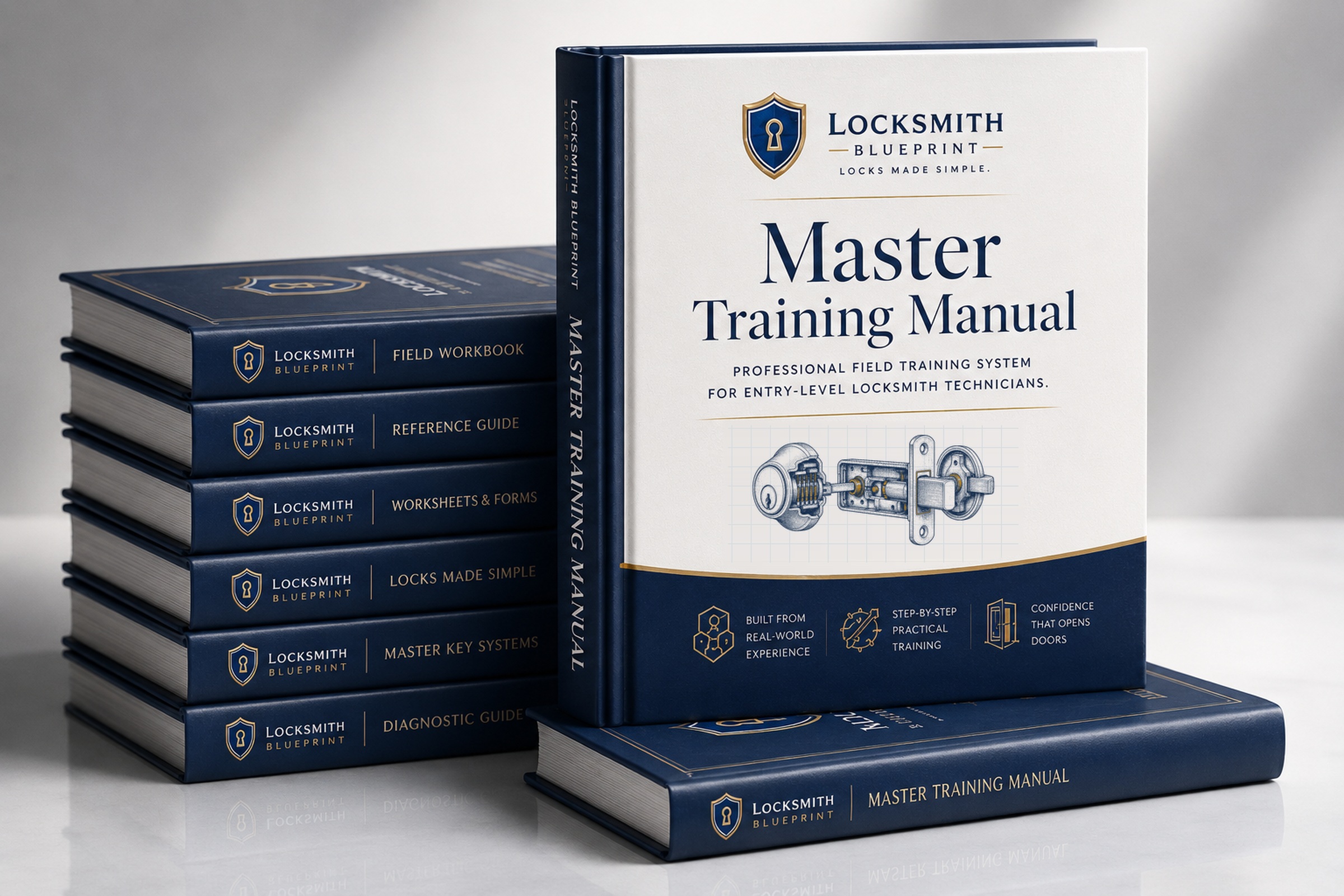
Turn the New Hampshire checklist into real mechanical skill
The Master Training Manual provides the connected written instruction, diagrams, checklists, and field reference that a short state guide cannot contain. It is training—not a government credential—and it should be paired with deliberate hands-on practice.
Verify New Hampshire at the source
These government sources support the statewide and specialty-scope statements used in this guide. They are starting points, not a substitute for a written agency answer about a specific job.
Save an evidence record
- Record the service names you searched.
- Save the agency URL and access date.
- Write down the agency or local contact.
- Keep any written classification with the estimate.
- Schedule a recheck before adding services.
What do locksmiths earn in New Hampshire?
Locksmiths and safe repairers (SOC 49-9094), wage-and-salary employees. Source: U.S. Bureau of Labor Statistics, OEWS, May 2025. Medians exclude self-employed business owners.
In Bill’s 10+ years in the trade, he personally knows locksmiths earning around $150,000 a year—typically established business owners with years of experience.
That is Bill’s firsthand observation, not a typical or promised result. What you earn depends on your market, skills, licensing, hours, pricing and business costs. Results vary. Watch Bill explain the numbers.
Choose the resource that matches your next step
These products support training and business planning. They do not replace New Hampshire licensing, permits, supervision, insurance, or official approval.
Foundation Edition
A guided starting point for beginners who want the trade, service categories, and learning sequence explained clearly.
Master Training Manual
The complete beginner-first technical training and field-reference system for structured locksmith study.
Operator Version
The business operating system for a trained reader preparing to organize real locksmith-company workflows.
New Hampshire locksmith requirements FAQ
Does New Hampshire require a statewide locksmith license?
No statewide locksmith-specific license identified. Verify the exact service and current official guidance before paid work.
Is a locksmith exam required in New Hampshire?
No confirmed locksmith exam. A separately regulated contractor, electrical, alarm, or security role can have its own qualification rules.
Do New Hampshire locksmiths need a background check or fingerprints?
Not identified for ordinary mechanical locksmith work; fingerprinting was also not identified for ordinary mechanical locksmith work. Employer, local, alarm, security, or specialty rules can differ.
Should a beginner get training before working in New Hampshire?
Yes. Even when no statewide locksmith-school mandate is identified, a beginner should learn mechanical fundamentals, practice on owned hardware, use customer-verification procedures, and seek supervised field feedback before solo paid work.
What should be verified locally in New Hampshire?
City, county, and scope-specific rules may apply even when no statewide locksmith credential is identified. Also verify zoning, home-business, permits, advertising, construction, fire, electrical, alarm, and access-control rules that match the location and complete job.
What is the safest first paid locksmith work in New Hampshire?
Choose a narrow mechanical service you can perform and test reliably, confirm customer authority, document the approved scope, and stop when the job reaches an unverified specialty or exceeds your current competence.
Operator Version$197 · digital download via Gumroad