Rekeying a lock means changing the pins inside the cylinder so the old key stops working and a new key works, without replacing the hardware. Below: how the shear line works, the tools you need, the Kwikset steps, and how to test the job.
Do I Really Need a Locksmith? · Bill’s DIY series
“I can do this myself.” Do I really need a locksmith?
Verdict: MaybeHow locksmiths rekey a Schlage deadbolt
Get the After-a-Rekey Checklist →$4.99 · instant PDF downloadWatch a real one · 3.5 min
No working key for this deadbolt, so I shim it open, read the new key and repin it pin by pin. Stay for the test at the end.
Want more full-length jobs? Open Bill’s Video Library · Watch on YouTube
What is rekeying a lock?
Rekeying a lock means changing it so the old key no longer works and a new key does. Instead of replacing the entire lock, a locksmith changes the internal pins inside the cylinder to match a different key.
It’s one of the most common locksmith services because it is faster and usually much cheaper than replacing all the hardware. Most houses already have perfectly good locks; in many cases they simply need to be rekeyed to a new key. That’s why rekeying is first on our new homeowner lock checklist, and it’s covered in the closing-gift security packet agents can give their buyers.
Watch the full rekey process as the lock is disassembled, repinned to a new key, and tested at the shear line.
Kwikset rekey and shear-line walkthrough from Locksmith Blueprint Watch on YouTube.
How a lock actually works
Locks are simpler than you think. Inside the lock is a row of pins that must line up perfectly for the cylinder to turn.
- Each cut on the key lifts a pin to a specific height. The deeper the cut, the taller the pin usually needs to be.
- The most important part of the lock is the shear line.
- If the pins line up at the shear line, the lock turns smoothly. Too high or too low, and it won’t work correctly.
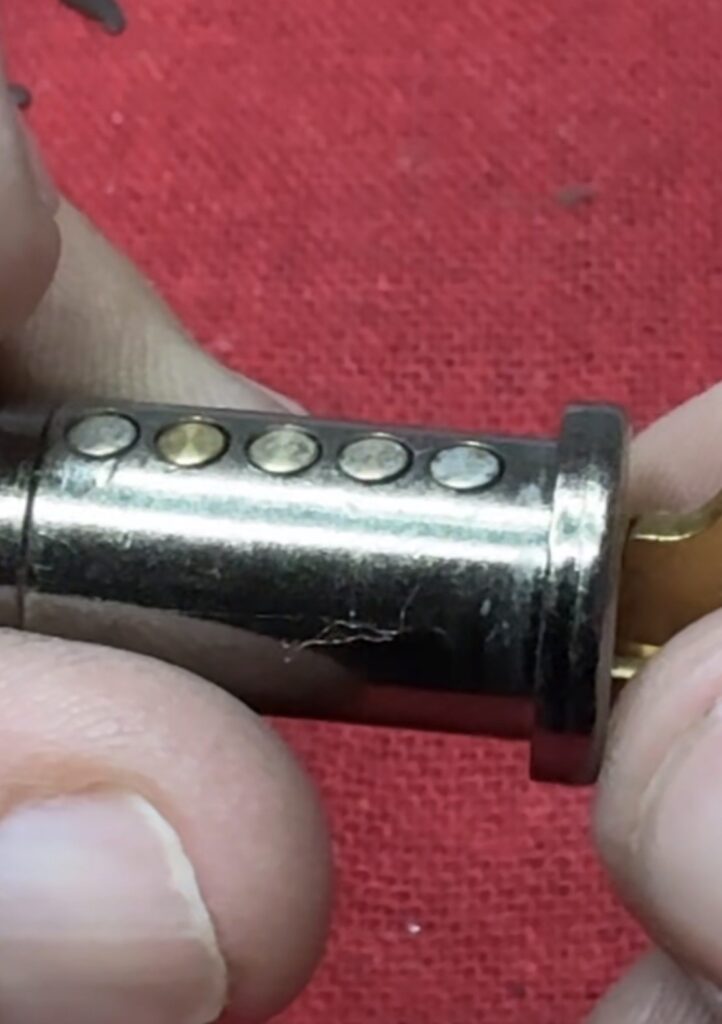
The shear line is where the pins must align perfectly for the lock to turn. Once you understand it, locks suddenly make sense. Go deeper in how locks work.
Choose the rekeying lesson that matches your cylinder
A brand name is a starting clue, not a complete identification. Match the lock’s mechanism, model and keyway before choosing a video, pinning kit or reset tool. The conventional Kwikset demonstration above is not a universal procedure for every lock carrying that brand.
Conventional Kwikset pin-tumbler cylinder
Use the main demonstration on this page to study the relationship between the key cuts, bottom pins and shear line. Record the cylinder you are practicing on and the compatible kit or chart you are using. A pin number from a different system is not a substitute for the correct manufacturer’s specification.
Schlage deadbolt
Compare the hardware in Bill’s Schlage deadbolt rekey demonstration with your own cylinder before applying the sequence. Schlage’s conventional-cylinder rekeying guide separates instructions by lock function. Schlage also publishes guidance for Advanced Rekey, a different rekeying system; do not assume every Schlage cylinder uses the same procedure.
Older Weiser hardware
Watch Bill’s old Weiser lock rekey demonstration as a hardware-specific example. Identify what you actually have before assuming a newer Weiser lesson or tool applies. Weiser also makes SmartKey products and publishes separate SmartKey rekey and keyway guidance.
Kwikset SmartKey or a failed SmartKey rekey
Use the SmartKey reset and troubleshooting resource to separate a working-key rekey, a missing-key cylinder reset and a misprogrammed cylinder. Those starting conditions matter more than the word “rekey” in a video title.
Trying to put several locks on one key? Make an opening-by-opening list of the intended key groups first. Matching the brand alone does not establish compatibility. The rekeying decision guide explains the condition and key-plan checks before work begins.
The basic tools needed to rekey a lock
You don’t need a huge toolbox. Most beginner rekey jobs can be done with a few basic locksmith tools:
- Tweezers
- A plug follower
- A pinning kit
- A Kwikset cylinder removal tool
- A key decoder or depth chart
- Small screwdrivers and picks
As you learn, you can add more locksmith tools and automotive programming equipment. See locksmith tools for beginners.
Step-by-step: how to rekey a Kwikset deadbolt
Identify the cylinder first: these steps are for a conventional pin-tumbler Kwikset cylinder. SmartKey uses a different mechanism and reset procedure. For a SmartKey lock with a missing working key or a failed rekey, use our Kwikset SmartKey reset guide and matching workshop video.
The Kwikset deadbolt is the first lock many locksmiths learn on because it’s simple, common and beginner friendly.
- Remove the deadbolt from the door.
- Remove the cylinder from the housing.
- Slide the plug out of the cylinder carefully.
- Remove the old bottom pins.
- Insert the new key.
- Install new pins that match the cuts of the new key.
- Verify that all pins align at the shear line.
- Reassemble the lock and test operation.
If the shear line is right, the lock will turn smoothly with the new key.
Watch a full real job · 21 min live
I rekey 5 house locks so the old keys stop working, start to finish.
Want more full-length jobs? Open Bill’s Video Library · Watch on YouTube
Common rekeying problems
If a lock doesn’t work after rekeying, the issue is usually the shear line or incorrect pin heights. Common beginner mistakes:
- Pins sitting too high
- Pins sitting too low
- Springs falling out during assembly
- Pins in the wrong chambers
- Plug not fully seated
- Testing without first checking smooth key operation
Most rekeying problems get much easier to diagnose once you understand the shear line.
A rekey is not finished when the plug turns once
Use this learning checklist on hardware you own or are authorized to service. It supplements the model’s instructions; it does not replace them.
- Identify the starting condition. Record which keys work before service, whether the door is open, and whether the lock already binds. Keep another way to enter available while testing.
- Test the completed assembly. With the door open, check each intended new key through repeated normal operation and removal. Include the copies that will actually be handed over. Investigate sticking, unusual force or a key that works only when held at an odd depth.
- Check the access change. For a straightforward change to a new operating key, verify that the former key no longer operates the rekeyed cylinder. A planned master-key system needs its own authorized key schedule and testing, not an improvised version of this beginner exercise.
- Separate cylinder operation from door alignment. After open-door operation passes, check the installed lock and door together. If a key works smoothly open but binds closed, do not assume another pin change will solve it. Continue with symptom-based lock troubleshooting.
- Record the result at every opening. Note the key group, keys tested, normal operation and any unresolved defect. One successful lock does not prove that the other locks in the group passed.
If a test fails, return to diagnosis before treating the work as complete. For your next practice session, revisit how the lock mechanism works and choose one controlled skill to improve.
Why most people replace locks when they don’t need to
Many homeowners replace perfectly good locks just because they want a different key. Usually the hardware is still completely usable and only needs to be rekeyed, and a locksmith can usually do that faster and cheaper than replacing every lock. Use this replace-versus-rekey comparison before deciding whether hardware should stay or go.
Locksmith Blueprint | Locks Made Simple
Locks Made Simple was created to make locksmithing easier to understand for beginners. Most people think locks are complicated until they see how the pins, keys and shear line work together.
This educational division of Locksmith Blueprint focuses on real-world locksmith explanations, printable guides, diagrams, walkthrough videos, and beginner-friendly training designed to simplify locksmithing step-by-step. Thinking about doing this for a living? Start with how to become a locksmith or, in Arizona, how to become a locksmith in Arizona.
Learn how locks actually work
The more you understand the shear line, pin heights and how keys interact with locks, the simpler locksmithing becomes. Locks are easier to understand than most people think.
What does a rekey cost? See how much it costs to rekey a lock in 2026: service call, per-lock price and how to keep it cheap.
Before you buy parts or book a locksmith
Use the free lock-check checklist to record your symptom, hardware and measurements. Keep it beside the matching repair guide so you buy for the problem you actually have.
Printable guides from Bill
After you rekey
Rekeying changes who can get in. These printable checklists cover what comes next: spare keys, codes and the other doors.
Printable PDFs from Kwikpick Lock and Safe. Instant download, checkout by Gumroad. More for new homeowners on our new homeowner page.
Parts and tools for this problem
Identify your hardware and the cause before buying. Choose only the product that matches your diagnosed problem and manufacturer instructions.
As an Amazon Associate, I earn from qualifying purchases.
Prime-Line E 2400 Re-Keying Kit, Kwikset 5-Pin Style, 1 Kit
Compatibility: Conventional compatible Kwikset five-pin cylinders, existing working key required, rekeys to included precut keys; not SmartKey, six-pin Titan, or an arbitrary key the homeowner already owns.
It lets a homeowner retain compatible working hardware while changing which included key operates it.
View Prime-Line E 2400 Re-Keying Kit, Kwikset 5-Pin Style, 1 Kit on Amazon (paid link) →Prime-Line E 2402 Re-Keying Kit, Schlage Type "C" 5-Pin Style, 1 Kit
Compatibility: Compatible Schlage Type C five-pin cylinders, existing working key required, rekeys to included precut keys; do not assume six-pin, restricted-keyway or other-brand compatibility.
It offers the corresponding brand-specific homeowner rekey option without directing Schlage owners to a Kwikset kit.
View Prime-Line E 2402 Re-Keying Kit, Schlage Type "C" 5-Pin Style, 1 Kit on Amazon (paid link) →
Locksmith BlueprintLocks Made Simple
Real locksmith know-how from Bill, a working locksmith in Arizona: short videos, plain-English guides and printable checklists.