What Tools Do Locksmiths Use?
Most people have never seen the tools a locksmith uses every day.
From lock picks and tension wrenches to pinning kits and plug followers, each tool has a specific job. In this guide, we’ll explain some of the most common locksmith tools and how they help locksmiths service locks, make keys, and perform rekeys.
Locksmith tools including lock picks, pinning kit, plug followers, tweezers, tension wrench, keys, and lock cylinders
Watch the Video
Common Locksmith Tools
Lock Picks
Lock picks are used to manipulate the pins inside certain locks when keys are unavailable. While they are one of the most recognized locksmith tools, most locksmith work actually involves keys, lock cylinders, and rekeying.
Pinning Kits
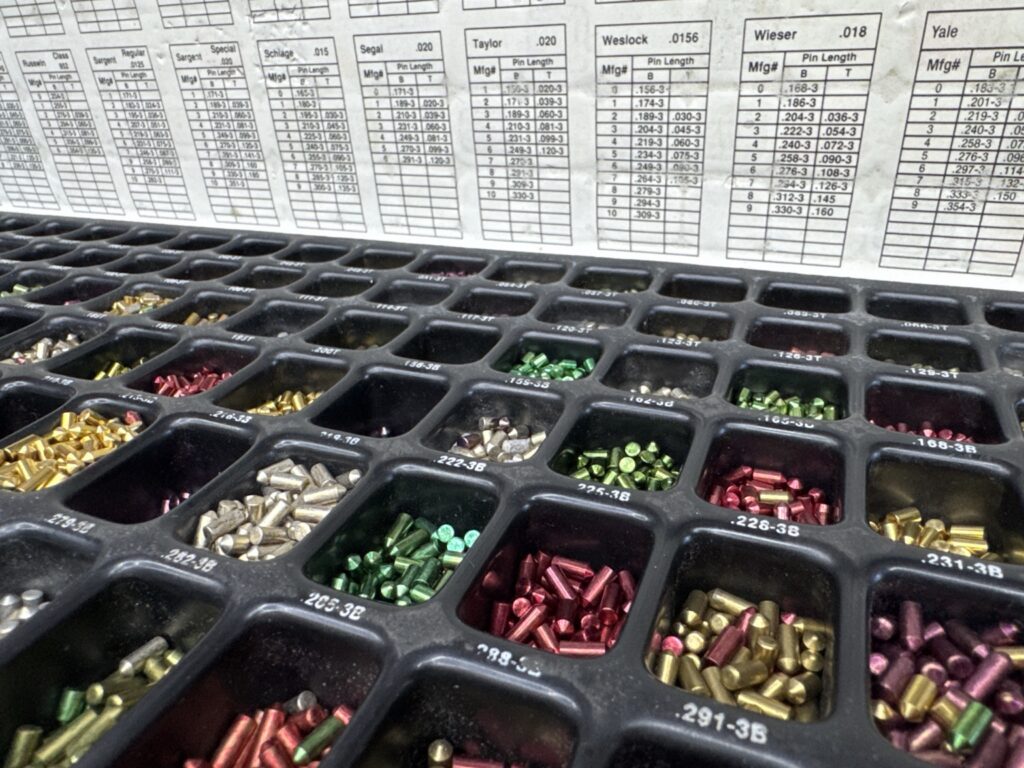
A pinning kit contains the pins used to match a lock to a specific key. During a rekey, locksmiths change these pins so old keys no longer work and new keys operate the lock.
Plug Followers
Plug followers help locksmiths remove and reinstall lock cylinders during a rekey. They prevent springs and pins from flying out when the cylinder plug is removed.
Tweezers
Locksmith tweezers are designed to handle tiny lock pins accurately. They make it easier to sort, install, and replace pins during the rekeying process.
A working locksmith’s toolbox, organized by job
The four tools above are where most people start, but a working locksmith carries far more than a pick set. A service van is organized around the jobs that actually come in: rekeys, lock changes, lockouts, key cutting, door repairs, car keys, and safes. Each type of call has its own tools. This page walks through that professional toolbox so you can understand what you see a locksmith pull out on a call. If you are deciding what to buy first as a student, use the separate beginner tool guide instead; it covers practice kits by learning stage.
1. Rekeying and lock changes
Rekeying is the bread-and-butter residential job, so this kit is used almost every day. Beyond the pinning kit, plug followers, and tweezers, a locksmith keeps a pinning tray or mat so loose pins and springs never roll off a counter, a key gauge to read the cut depths of a customer’s existing key, and cylinder and retainer tools for removing the cylinder from knobs, levers, and deadbolts of different brands. Spare springs, top pins, and retainer clips are consumables; they get lost or worn and are replaced on the spot. For lock changes, the van carries common replacement deadbolts and knob or lever sets in the finishes customers usually ask for, so the job can be finished in one visit.
2. Key cutting and duplication
A key duplicator traces an existing key and copies it onto a blank. A code or depth cutter cuts a key from numbers (a key code or the depths read with a gauge), which is how a locksmith makes a working key when no good original exists. Around those machines sit an organized stock of key blanks (residential blanks such as the common Kwikset and Schlage profiles move fastest), a deburring brush to clean fresh cuts, and calipers or a micrometer to check accuracy. A clean, accurate key matters: a sloppy copy is one of the most common reasons a key sticks or a lock wears out early.
3. Lockouts
For house and business lockouts, professionals use non-destructive entry tools first: picks and tension tools, plug spinners, and specialty tools designed to work on the door’s latch or lever without damaging it. Drilling a lock is a last resort, not a starting point. For vehicle lockouts, the usual kit is a set of soft wedges or inflatable air wedges and a long-reach tool to press an unlock button or pull a handle. The old “slim jim” is rarely the right tool on modern cars because door panels hide airbags, wiring, and side-impact parts. On every lockout, a responsible locksmith confirms the customer is authorized to enter before starting, which is as important as any tool in the bag.
4. Door hardware installs and repairs
Many calls that sound like “lock problems” are really door problems. For these, the van looks more like a carpenter’s kit: a cordless drill and impact driver, a hole saw and boring jig for new lock installs (most residential doors use a 2-1/8 inch face bore and a 1 inch edge bore), wood chisels for latch and strike mortises, files, a level, a tape measure, shims, and long 3 inch screws to pull a sagging hinge back into place. These are the tools behind fixes like a door or deadbolt that won’t latch, a lock installed backwards, or a new deadbolt installation.
5. Car keys and programming
Automotive work is its own specialty. Most modern car keys contain a transponder chip, and many are remotes or push-to-start smart keys, so cutting the metal blade is only half the job. Automotive locksmiths carry a key programming tool that connects to the vehicle’s diagnostic port, often with a paid software subscription, plus a stock of vehicle-specific blanks, remotes, and transponders. High-security “laser-cut” or sidewinder keys need a dedicated cutting machine. Some locksmiths also use pick-decoder tools that read the lock’s cuts so a key can be cut by code. This equipment is expensive and changes with every model year, which is why many locksmiths add car keys only after their residential work is steady.
6. Safes
Safe work ranges from simple to highly technical. On the simple end are change keys for resetting combinations on mechanical dials, replacement batteries and keypads for electronic safe locks, and the brand-specific override keys used when a keypad fails. On the technical end are dial manipulation skills, borescopes for looking inside a lock through a small hole, and drill rigs with hardened bits for safes that can’t be opened any other way. Like car keys, safe opening is learned over time. If your own safe is stuck, start with what to check when a safe won’t open.
7. Smart locks and electronic hardware
Keypad and smart locks add a small electronics kit: fresh batteries of the common sizes, a battery tester or multimeter, and a 9-volt battery for keypad models that have emergency power contacts on the outside. Just as important is the manufacturer’s setup and reset procedure, kept on a phone or tablet, because many “broken” smart locks are pairing or settings problems rather than hardware failures. See smart lock not connecting for the checks a homeowner can do first.
8. Commercial hardware
Businesses use heavier hardware than homes: mortise locks, rim and mortise cylinders, interchangeable cores, exit devices (panic bars), and door closers. Servicing them takes cylinder cams and wrenches, core control keys for interchangeable-core systems, hex keys and adjustment tools for closers and exit devices, and an organized stock of cylinders and parts. Master key systems also add record keeping, because a locksmith has to track which keys open which doors.
9. Everyday diagnostic tools
Some of the most-used tools are the least exciting: a bright headlamp, an inspection mirror, a dry lubricant made for locks, cleaning supplies for gritty cylinders, and a phone camera to photograph hardware before it comes apart. A good diagnosis saves the customer money, and these simple tools are how a locksmith tells a worn key from a worn lock, or a lock problem from a door problem. For the symptoms they help sort out, see common lock problems.
This page vs. the beginner tool guide
| Question | Where to look |
|---|---|
| What does a professional locksmith actually carry, job by job? | This page |
| What should I buy first to practice as a student? | Locksmith tools for beginners |
| Which tools are used on rekeys, lockouts, car keys, and safes? | This page |
| Which tools should a beginner wait to buy? | Locksmith tools for beginners |
Tools, the law, and trust
Owning lock picks is legal in most of the United States, but laws differ. In some states, carrying picks or entry tools can be treated as possessing burglary tools when there is evidence of criminal intent, and some states regulate who can work as a locksmith. Many locksmith supply distributors also sell certain entry, automotive, and safe tools only to verified professionals. Check your own state’s rules on the locksmith license requirements by state page. Tools are only trustworthy in the hands of someone who verifies authorization on every job.
Locksmith tools FAQ
What tool does a locksmith use most?
For a residential locksmith, the rekeying kit (pinning kit, plug follower, tweezers, and key gauge) and the key machine get the most use, because rekeys, lock changes, and key copies make up a large share of everyday calls. Picks are used far less than most people think.
How much does a professional locksmith toolset cost?
It depends on the services offered. Hand tools and a rekeying kit can cost a few hundred dollars. Key machines, automotive programmers with software subscriptions, and safe equipment can each cost thousands. Most locksmiths build their toolbox gradually, adding equipment when a service brings in steady work.
Do locksmiths use power tools?
Yes. A cordless drill and impact driver are used daily for installing locks, adjusting strikes, and repairing doors. Drilling a lock open is a last resort, used only when non-destructive methods won’t work.
Tools Are Only Part of Locksmithing
Many people think locksmithing is all about having the right tools.
The reality is that understanding how locks work is often more important than the tools themselves. Locksmith tools help make the job easier, but knowledge and experience are what allow a locksmith to diagnose problems, rekey locks, and create solutions for customers. Use the Start Your Locksmith Journey sequence to organize what to learn first, then ride along with a real locksmith to see how tools fit into actual diagnosis and job flow.
To see how these tools fit into real service calls, review what locksmiths actually do across diagnosis, rekeying, door hardware, and customer work.
For the learning sequence behind the equipment, continue with the locksmith training you actually need to get started.
Building a first practice kit? Compare the locksmith tools beginners actually need before buying specialized equipment.
Continue Learning
Explore Locksmith Blueprint
Choose Your Next Locksmith Training Step
Start with Foundation for a structured beginner path, use the Master Training Manual for deeper technical references, and explore Operator for the business system behind professional tools and paid work.

Locksmith BlueprintLocks Made Simple
Real locksmith know-how from Bill, a working locksmith in Arizona: short videos, plain-English guides and printable checklists.