How to Become a Locksmith in Rhode Island
No statewide locksmith license identified in Rhode Island. Burglar-alarm and higher-voltage electrical work are regulated separately.
Bill’s step-by-step locksmith business startup system.
One-time purchase via Gumroad. Study and planning aid only; official agencies set the requirements.
Rhode Island quick facts
Summarized from the official sources cited in this guide. Confirm with the agency before you pay or accept work.
- State license
- None identified. Locksmith is not listed as a separate occupation in the current state licensed-occupation directory reviewed. Rhode Island licensed occupations
- Exam & background
- No confirmed locksmith exam; background check and fingerprinting not identified for ordinary mechanical locksmith work.
- Business
- Business registration applies; burglar-alarm businesses and alarm agents use a separate licensing system.
- Specialty work
- Burglar-alarm and higher-voltage electrical work are regulated separately. Rhode Island alarm business rules
Requirements change. This is not legal advice. Full details and every source are below.

How to Become a Locksmith in Rhode Island
Rhode Island's current licensed-occupation directory does not list locksmith as a separate occupation. Alarm businesses and alarm agents follow a distinct active licensing rule, so a mechanical locksmith plan must not be used to imply permission for burglar-alarm or related regulated work.
The Rhode Island decision that prevents expensive mistakes
A property manager asks for apartment rekeys and also wants alarm contacts moved. The rekeys require verified control of each unit and a documented key handoff. The alarm changes belong to the separate alarm-business and alarm-agent system and should not be bundled under ordinary mechanical service.
Work-scope boundary
Burglar-alarm and higher-voltage electrical work are regulated separately.
Local layer
City, county, and scope-specific rules may apply even when no statewide locksmith credential is identified.
Safe rule
Describe the complete job to the responsible agency. Never assume a business name, training certificate, or mechanical-lock task also covers wiring, alarms, construction, or life-safety work.
What the current Rhode Island sources do—and do not—require
This is a scoped research result, not a universal permission slip. It addresses ordinary mechanical locksmith work first and separates specialty work that can trigger a different rule.
Statewide locksmith license
No statewide locksmith-specific license identified
Locksmith exam
No confirmed locksmith exam
Age
No statewide locksmith-specific age requirement was identified in the official sources reviewed. Employers, contracts, and specialty credentials may set separate minimums.
Background check
Not identified for ordinary mechanical locksmith work. Recheck any employer, local, alarm, security, or specialty-credential rule.
Fingerprinting
Not identified for ordinary mechanical locksmith work. Do not apply that answer to a separately regulated security or alarm role.
Training or apprenticeship
No statewide locksmith-specific training or apprenticeship mandate was identified. Structured instruction, hands-on practice, and supervised field exposure remain the safest professional path.
Business or agency license
Business registration applies; burglar-alarm businesses and alarm agents use a separate licensing system.
Insurance or bond
Insurance: Confirm with the state, locality, insurer, and contracting authority.; Bond: Not identified in current sources reviewed
Evidence status: VERIFIED – CURRENT. Official-source review: 2026-09-03. Recheck before paid work because laws, rules, agency guidance, forms, and local requirements can change.
Start with work you can explain, practice, and verify
A first job should match your mechanical skill, customer-verification process, tools, insurance, and confirmed legal scope. Employment with an experienced locksmith can add supervision, hardware variety, estimating practice, and feedback that a video cannot provide.
Build the starter kit around the work: common hand tools, plug followers, pinning tools, tweezers, key gauge, practice cylinders, measurement tools, door and strike inspection tools, documentation forms, eye protection, and secure key control. Do not buy advanced bypass, automotive, safe, or electronic equipment before you understand its lawful use and limitations.
Rhode Island job-scope examples
- ✓Apartment rekeys completed from an authorized unit list with controlled key transfer.
- ✓A storefront cylinder repaired without touching the existing alarm system.
- ✓An alarm sensor, monitoring, or alarm-agent task directed to the active licensing pathway.
- ✓A rated door, egress device, or powered lock reviewed for fire, electrical, alarm, and permit responsibilities.
Before dispatch: confirm identity, authority over the property or vehicle, exact opening, hardware, requested result, exclusions, estimate approval, and the responsible person for final handoff.
A Rhode Island path you can follow in order
Confirm the occupation-list answer
Use the current state directory to document that locksmith is not listed as its own occupation, with the date and exact service names searched.
Set up the business and municipality
Verify entity, tax, trade-name, zoning, local business, vehicle, signage, and permit rules at the operating address.
Create an alarm-work firewall
Train dispatch and sales staff to flag alarms, monitoring, alarm agents, powered systems, and related wiring for the active Rhode Island licensing check.
Protect multi-unit authorization
Record the manager or owner's authority, unit status, occupant notice, key quantities, master-key implications, and final recipient for every rekey.
Build commercial hardware competence
Practice door and frame inspection, cylinders, latches, bolts, closers, exit hardware awareness, and stop-or-refer decisions before complex field work.
Watch it, read it, then do it in Rhode Island
The video explains income context; it does not replace Rhode Island licensing, local, business, or work-scope verification.
Use the field video to connect training, service mix, and realistic earning expectations.
Use this written Rhode Island guide for the current state decision, boundaries, links, and reference details.
Write your starter service list, verify every category, and practice the mechanical workflow on owned hardware.
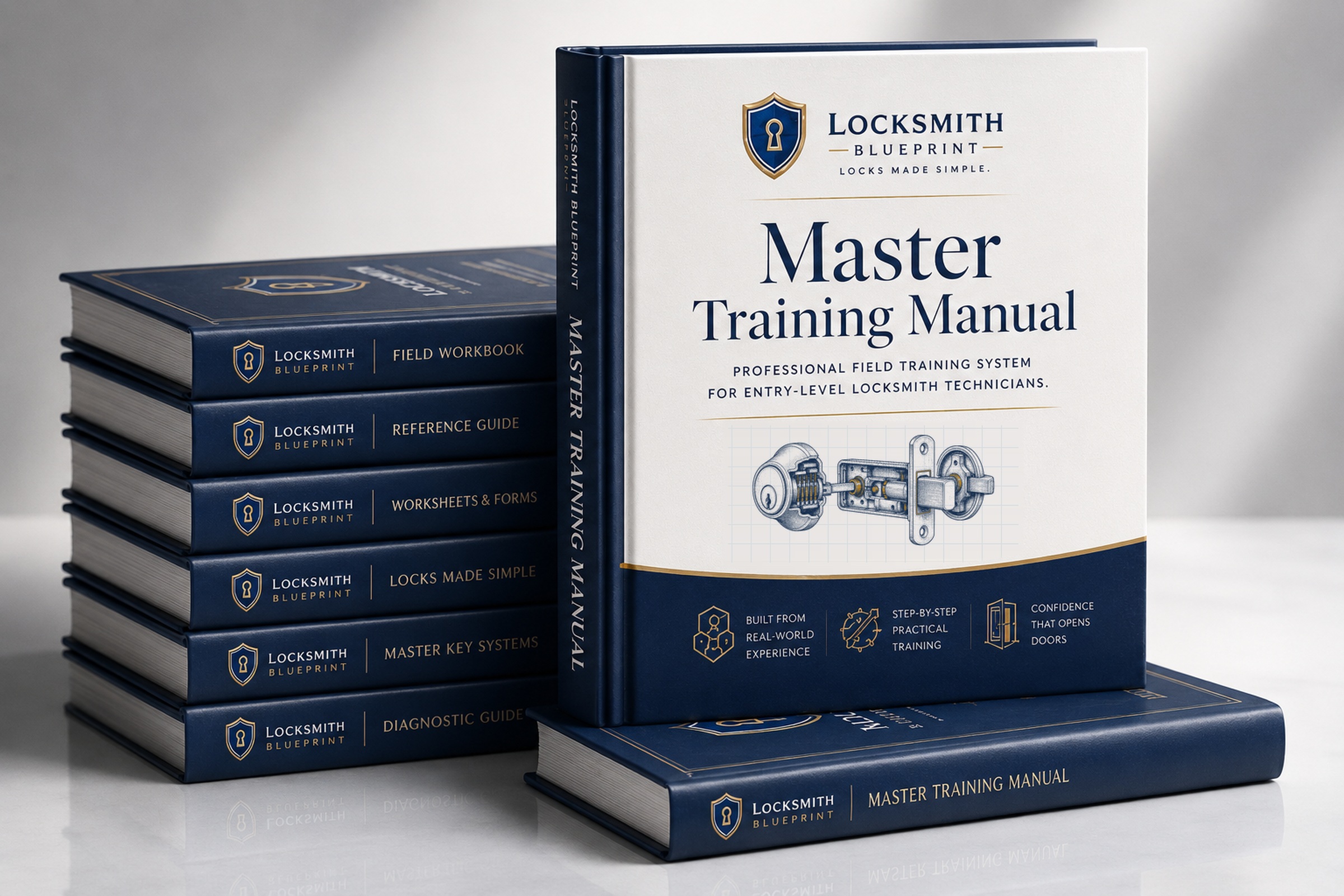
Turn the Rhode Island checklist into real mechanical skill
The Master Training Manual provides the connected written instruction, diagrams, checklists, and field reference that a short state guide cannot contain. It is training—not a government credential—and it should be paired with deliberate hands-on practice.
Verify Rhode Island at the source
These government sources support the statewide and specialty-scope statements used in this guide. They are starting points, not a substitute for a written agency answer about a specific job.
Save an evidence record
- Record the service names you searched.
- Save the agency URL and access date.
- Write down the agency or local contact.
- Keep any written classification with the estimate.
- Schedule a recheck before adding services.
What do locksmiths earn in Rhode Island?
Locksmiths and safe repairers (SOC 49-9094), wage-and-salary employees. Source: U.S. Bureau of Labor Statistics, OEWS, May 2025. Medians exclude self-employed business owners.
In Bill’s 10+ years in the trade, he personally knows locksmiths earning around $150,000 a year—typically established business owners with years of experience.
That is Bill’s firsthand observation, not a typical or promised result. What you earn depends on your market, skills, licensing, hours, pricing and business costs. Results vary. Watch Bill explain the numbers.
Choose the resource that matches your next step
These products support training and business planning. They do not replace Rhode Island licensing, permits, supervision, insurance, or official approval.
Foundation Edition
A guided starting point for beginners who want the trade, service categories, and learning sequence explained clearly.
Master Training Manual
The complete beginner-first technical training and field-reference system for structured locksmith study.

Operator Version
The business operating system for a trained reader preparing to organize real locksmith-company workflows.
Rhode Island locksmith requirements FAQ
Does Rhode Island require a statewide locksmith license?
No statewide locksmith-specific license identified. Verify the exact service and current official guidance before paid work.
Is a locksmith exam required in Rhode Island?
No confirmed locksmith exam. A separately regulated contractor, electrical, alarm, or security role can have its own qualification rules.
Do Rhode Island locksmiths need a background check or fingerprints?
Not identified for ordinary mechanical locksmith work; fingerprinting was also not identified for ordinary mechanical locksmith work. Employer, local, alarm, security, or specialty rules can differ.
Should a beginner get training before working in Rhode Island?
Yes. Even when no statewide locksmith-school mandate is identified, a beginner should learn mechanical fundamentals, practice on owned hardware, use customer-verification procedures, and seek supervised field feedback before solo paid work.
What should be verified locally in Rhode Island?
City, county, and scope-specific rules may apply even when no statewide locksmith credential is identified. Also verify zoning, home-business, permits, advertising, construction, fire, electrical, alarm, and access-control rules that match the location and complete job.
What is the safest first paid locksmith work in Rhode Island?
Choose a narrow mechanical service you can perform and test reliably, confirm customer authority, document the approved scope, and stop when the job reaches an unverified specialty or exceeds your current competence.
Operator Version$197 · digital download via Gumroad